
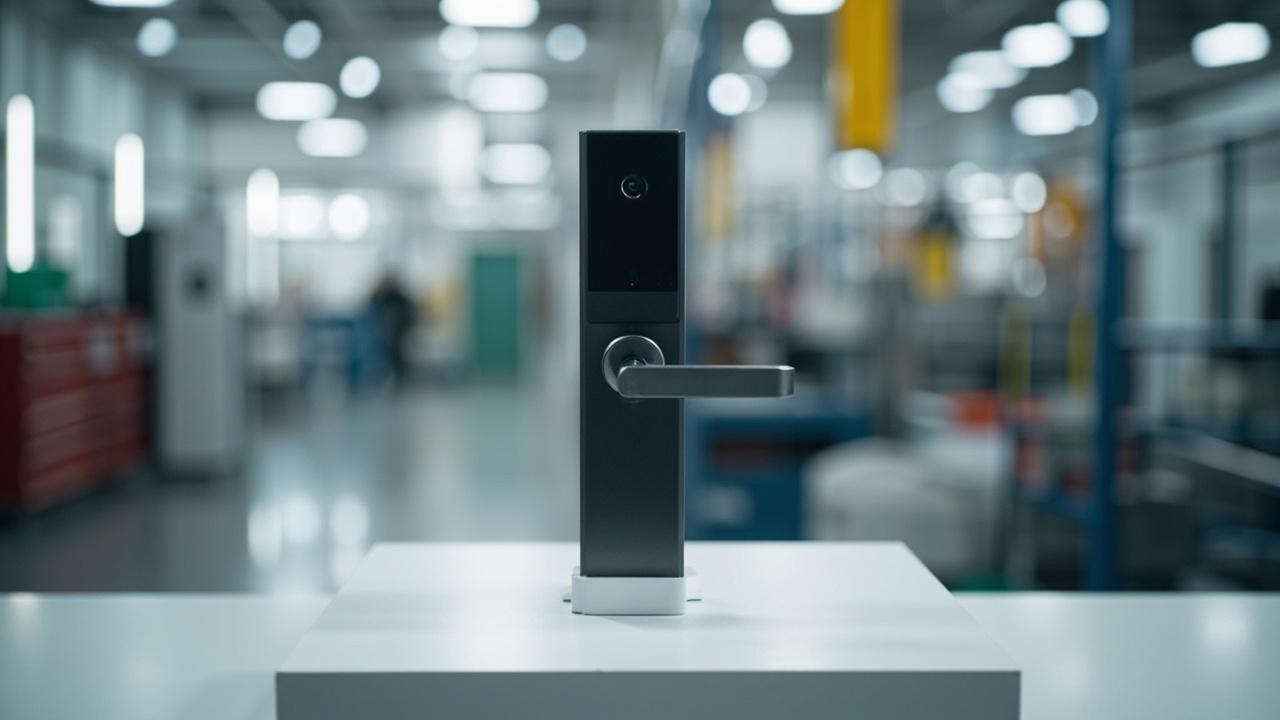
Smart Lock Battery Management for Rentals
Smart lock battery management for rentals is the operator's calendar, not the lock's calendar: a phased rotation scheme that puts every door in a rental estate on a known cohort, a detection regime that surfaces low cells before the voltage cliff, a tenant notification template that moves the swap window inside lease boundaries, and a missed-swap tracker that escalates on a clock instead of on an incident. The hardware is the easier half; the half that decides whether the lock program still works in year three is the discipline of running the same fleet on the same schedule across a hundred doors and a hundred tenancies without anyone falling through.
This playbook is written for the single-owner-operator running a multi-unit rental estate on their own asset — the build-to-rent landlord, the family-holding company that owns and operates the building, the in-house facilities team at a corporate residential portfolio, the co-living operator running a single block. It is deliberately distinct from the per-lock, per-door lifecycle lens in the SLK-1104 battery guide (one door, six phases, captured values) and from the move-in/move-out credential ceremony in Smart Locks for Apartment Operators. This document assumes the procurement decision is already made, the fleet is installed, and the question on the table is the calendar: which door gets touched in week one of which month, how the operator hears about a dying cell on floor twelve, what the tenant sees in their inbox, and what happens when a swap gets skipped.
If you are still choosing the lock hardware for a rental estate, start at Smart Lock Access Management for Rentals. If you need the emergency-access protocol for the day a battery dies between swaps, that lives in Smart Lock Emergency Access for Rentals. What follows assumes the locks are on the doors, the keys are cut, and Monday morning is the first day of the rotation.
The Estate Calendar at a Glance: Eight Phases, One Loop Per Cohort
The rotation is not a straight line for the estate; it is a phased loop that runs once per cohort per cycle, and the operator's job is to keep every cohort somewhere inside the loop. A cohort here means a labelled group of doors — typically a floor, a stair stack, or a building wing — that shares the same battery fact line (cell format, cell count, expected duty) and therefore the same swap schedule. Here is the map this playbook walks, phase by phase, with arrows showing the normal sequence.
| Phase | Name | Entry condition | Exit condition | Owner | Failure mode if skipped |
|---|---|---|---|---|---|
| P0 | Per-Model Fact Capture | Lock model on door group identified | Battery type, voltage, cell count, autonomy line, warning channel all confirmed on the product page | Procurement / regional lead | A calendar built on assumed endurance drifts against the voltage cliff |
| P1 | Stockpile & Spare Set | Cohort size known, cell format confirmed | Spare cells counted, dated, segregated, and logged into the estate ledger | Facilities scheduler | A swap request hits an empty stockpile and slips a week |
| P2 | Cohort Calendar Assignment | Cohort size, autonomy line, and warning runway confirmed | Each cohort placed on the annual rotation grid with a month and a week | Operations manager | Doors drift out of phase and warnings bunch in one quarter |
| P3 | Low-Battery Detection Regime | Detection channels per cohort known and instrumented | Each door has at least one live detection channel feeding the operator | Site supervisor | A door reaches the cliff with no warning recorded |
| P4 | Tenant Notification & Window Booking | Cohort due window opens, door list confirmed | Tenant notified, swap window booked, access notes updated | Tenant relations coordinator | Tenant on arrival sees a half-open door and a stranger with a screwdriver |
| P5 | Swap Execution & Re-Commissioning | Window open, technician on site, spare set on hand | New cells in, baseline re-logged, door tested, log closed | Maintenance technician | A "replaced" lock that was never tested runs until the next cliff on half-charge cells |
| P6 | Missed-Swap Tracking & Escalation | P5 missed its exit criterion (no-show, no access, no cells) | Door re-routed to exception queue, severity scored, escalation fired | Operations manager | A missed swap becomes a tenant complaint two months later |
| P7 | Annual Calendar Reset & Lifecycle Audit | Twelve cohorts completed one cycle | Endurance figure updated from actual cycles, next year's calendar rebalanced | Asset manager | The next cycle uses last year's figure even though door count grew |
P3 and P6 are the two phases most rental estates skip and most regret skipping later. The whole point of the design below is the chain P0 → P1 → P2 → P3 → P4 → P5 → P7, with P6 documented in full so you can see what the missed-swap tracker is for.
P0 — Per-Model Fact Capture: One Lock Model, One Battery Line
A rotation calendar built on assumed endurance drifts against the voltage cliff on the doors that use the most. Before any cohort gets a date on the calendar, every lock model on the estate needs six power lines filled from the dated product page, and every value on this list starts as a blank that is filled in once and re-confirmed at every annual reset.
| Battery fact line | Acceptable source | What the value controls |
|---|---|---|
| Cell format (AA / AAA / CR-series / custom pack) | Dated product page, datasheet, written supplier answer | What the stockpile contains; what the swap kit looks like |
| Cell count per lock | Same | Cells consumed per swap; cohort spend per cycle |
| Rated autonomy — months | Same | The first-pass cohort spacing before any usage logging |
| Rated autonomy — operating cycles | Same | The second-pass check against actual unlocks per door per day |
| Low-battery warning channel | Product page, sample testing | Whether detection is visual, audible, app-based, or absent |
| Emergency power interface (if any) | Same | What the missed-swap recovery procedure looks like |
Two discipline rules make this table worth filling. First, the only permitted source is a dated artefact — a product page printout with the retrieval date, or a supplier answer in writing. A figure remembered from a chat window is not a figure. Second, endurance claims must arrive with their unit and their duty assumption attached: "Y months at Z unlocks per day" answers a question, while "long battery life" answers nothing.
For shape-of-evidence only, elsewhere in this manufacturer's catalog the SLK-9936S hotel lock publishes "power 4 × AA" and "battery operating cycles >15,000" on its product page. That is what a completed power line looks like — a stated format and a stated endurance figure with its unit — and it is the format to demand for every lock model on the estate. It is not a number to port across product lines. The 9936S line belongs to the hotel lock class; a keypad lock on a unit entrance, a Bluetooth lock on a staff door, and a narrow-edge lock on a closet door each carry their own line and their own calendar.
Why demand the cycles figure even when the page also gives months? Because months assume a duty cycle set by someone who has never seen your door. A unit with three adults and a daily cleaner pulls a different number of cycles than a unit with one tenant and no service window, and the only way to know which is to keep a usage log for the first swap cycle (P5 below) and compare it to the rated one. The cycles figure paired with your own unlocks-per-door-per-day count gives you arithmetic; the months figure alone gives you a hope.
Direct answer: To build a defensible rental-estate battery calendar, capture six power facts per lock model — cell format, cell count, month-based autonomy, cycle-based autonomy, warning channel, and emergency power interface — each traced to a dated product page or written supplier answer, before any cohort gets a date on the rotation grid.
P1 — Stockpile & Spare Set: Cells on Hand Before the Cohort Is Dated
A swap request that hits an empty stockpile slips a week, and a week on a single door is the difference between a clean swap and a tenant callout. Once the cell format is known, the stockpile gets planned against the largest cohort in the estate and held in two locations: a master reserve at the operator's office or storeroom, and a working reserve at the building's service room.
| Stockpile metric | Estate value | Calculation rule | Reorder trigger |
|---|---|---|---|
| Cells per single door swap | — | Cell count from P0 | N/A |
| Largest cohort size | count of doors on the highest-density floor or stair stack | Door census, by cohort | N/A |
| Working reserve (per building) | 2 × largest cohort swap in cells | Allows one full missed cohort + one partial | Reserve drops below 1 × largest cohort |
| Master reserve (per estate) | 4 × largest cohort swap in cells | Allows three missed cohorts before reorder | Reserve drops below 2 × largest cohort |
| Cell freshness lot policy | Cells purchased in one lot per estate-wide batch | Same chemistry, same date code | N/A |
| Cell segregation | New cells on one shelf, used cells on another, recycling on a third | Physical separation by state | N/A |
Cells marked — have no documented value in this article’s sources; obtain the figure from the supplier’s written specification.
The freshness-lot rule is the one most rental estates ignore and most regret ignoring later. Mixing cells from different manufacturers in the same lock produces uneven discharge and a lock that says "battery low" while three of the four cells still read healthy. The cure is a single-lot policy: every swap on a single door draws from the same pack, and the pack is replaced as a pack when it falls below half.
The working reserve lives in a labelled cabinet in the service room. The master reserve lives in a dry, room-temperature cabinet in the operator's office, never in a van or a basement that swings hot and cold. Heat is the silent killer of alkaline cells, and a stockpile stored above thirty degrees will be a stockpile of half-full cells by the time it gets used.
P2 — Cohort Calendar Assignment: Floors, Wings, and Stacks on a Grid
The rotation grid is the spine of the program. Twelve months on one axis, eight cohorts (typically floors or wings) on the other, and each cell on the grid carries a swap date, an owner, and a status sticker. The grid is the only document the operations manager should have to look at on a Monday morning.
| Month | Cohort A (Ground / commercial frontage) | Cohort B (Floor 2, north stack) | Cohort C (Floor 3, north stack) | Cohort D (Floor 4, north stack) | Cohort E (Floor 5, south stack) | Cohort F (Floor 6, south stack) | Cohort G (Floor 7, penthouse and A) | Cohort H (Staff / service rooms) |
|---|---|---|---|---|---|---|---|---|
| Jan | scheduled | — | — | — | — | — | — | scheduled |
| Feb | completed | scheduled | — | — | — | — | — | completed |
| Mar | — | completed | scheduled | — | — | — | — | — |
| Apr | — | — | completed | scheduled | — | — | — | scheduled |
| May | — | — | — | completed | scheduled | — | — | completed |
| Jun | — | — | — | — | completed | scheduled | — | — |
| Jul | — | — | — | — | — | completed | scheduled | scheduled |
| Aug | scheduled | — | — | — | — | — | completed | completed |
| Sep | completed | scheduled | — | — | — | — | — | — |
| Oct | — | completed | scheduled | — | — | — | — | scheduled |
| Nov | — | — | completed | scheduled | — | — | — | completed |
| Dec | — | — | — | completed | scheduled | — | — | — |
Three rules hold this grid together. First, no two consecutive months touch the same stair stack — a tenant complaint on floor three in March must not collide with a maintenance window on floor two in February and a planned vacancy on floor four in April. Second, staff and service rooms rotate on a faster cadence than unit doors, because the duty cycle on a service door is higher (cleaner, contractor, maintenance, all day). Third, the ground floor / commercial frontage cohort and the staff-cohort rotate together twice a year, because they share the same lock class and the same cell format, and the operator wants both swap events to draw from the same stockpile event.
The first pass of this grid uses the rated autonomy in months from P0 as the cohort spacing. The second pass, after the first full cycle completes (around month thirteen), uses the actual unlocks-per-door-per-day count from the P5 logs. A cohort whose actual cycle count ran twenty per cent over the rated figure gets pulled forward by two months in the next cycle; a cohort that ran twenty per cent under gets pushed back. The grid is not a calendar handed down from on high; it is a calendar that learns from itself once a year.
P3 — Low-Battery Detection Regime: How the Operator Hears About a Dying Cell
A door that reaches the voltage cliff without warning is a door that the operator failed, not a door that the lock failed. The detection regime is the set of channels — visual, audible, app-based, on-lock indicator, audit-export — that surface a dying cell to someone who can act on it before the cliff. Different lock models ship with different channels; the operator's job is to know which channel is live on which cohort and to assign the response before the warning fires.
| Detection channel | Cohort coverage | Action on signal | Escalation if signal ignored |
|---|---|---|---|
| On-lock LED indicator (steady / flashing / colour change) | Every cohort — at the door | Site visit booked within 14 days | Door flagged for missed-swap severity scoring |
| Audible beep sequence during unlock | Most standalone locks | Same-day technician dispatched for the unit | Door logged in exception queue |
| App push notification (Bluetooth / Wi-Fi cohort) | App-enabled cohorts only | Tenant self-reports via in-app form, operator dispatches | Tenant relations notified, window booked |
| Audit-export cycle count from management software | Hotel-class locks, central-database mode | Operations pulls monthly count, cohort re-ranked on grid | Calendar reset advanced for cohort |
| Tenant self-report (call / email / ticket) | Universal fallback | Operator verifies with cross-check (sample door), then schedules | Confirmed door added to exception queue |
| Quarterly on-site sample inspection (one door per cohort) | Operator's own eyes | Spot-check confirms warning is firing as expected | Sample expanded to three doors if mismatch |
The single most common failure mode is the assumption that an app push notification exists when the lock is a standalone unit without a paired gateway. The detection channel has to match the lock model, not the marketing promise on the box. The fix is to walk the corridor with the lock's product page open and tick off, for each cohort, which channels are actually live.
A second failure mode is the LED indicator nobody reads. Some locks flash a colour sequence that the installer saw once at commissioning and never looked at again. The fix is a quarterly sample inspection — one door per cohort, opened by the technician, battery compartment closed, LED behaviour observed against the baseline recorded at P5 — and a photo of the indicator on the technician's phone for the next quarterly review.
A third failure mode is the tenant who never reports. A door that beeps twice every time it unlocks for three weeks and the tenant says nothing is a door whose battery is being drained by silence. The mitigation is the tenant notification programme in P4 below: tenants who understand what the warning means report it. Tenants who think the lock is broken stop using it and prop the door open, which is the worst outcome of all.
P4 — Tenant Notification Templates: The Message That Books the Window
A tenant who arrives to find a half-open door and a technician they do not recognise with a screwdriver is the moment a rental estate loses a renewal. The P4 template set is the language the operator uses — across email, app push, paper notice, and door hanger — to book the swap window inside lease boundaries and to leave a record of the visit that survives the next tenant.
| Template | Trigger | Channel | Lead time | Key content lines |
|---|---|---|---|---|
| Advance notice — full day per cohort | Cohort calendar week opens | Email + paper notice under door + building noticeboard | 14 days | Date, time window, technician name and ID, what to do if you cannot be home, contact line |
| Reminder — 48 hours | Window still open, no response | App push + SMS if phone on file | 48 hours | Same date / window, "we will knock at HH:MM", reschedule link |
| Day-of arrival | Technician entering building | SMS at door + doorbell ring | 0 hours | "Technician Name arriving, ID shown, job takes 10 minutes" |
| Completion notice | P5 closed | Email + paper note in mailbox | Same day | What was done, cells used, when next swap, who to contact if the door misbehaves |
| Reschedule request (tenant) | Tenant cannot make window | Tenant reply / app form | Anytime before window | Three new window options, picked within 24 hours |
| Missed-swap notification | Tenant absent without notice | Email + door hanger + follow-up call | Day after window | What happens next, new window, no-charge reschedule |
| Cell disposal notice (annual) | Estate-wide battery batch retired | Email + lobby poster | Once per year | Why we batch-replace, what we do with the old cells |
The advance notice does most of the heavy lifting. It carries the date, the time window, the technician's name and ID, the building's contact line, and a reschedule option. A tenant who reads the advance notice and does not reply is, by default, accepting the window. The completion notice is the proof of visit — it lives in the tenant's mailbox as evidence that the operator was there on the date the operator said it would be.
Two pieces of language deserve a second look. First, "your lock battery will be replaced" reads better than "your door will be serviced"; the first sentence names the thing the tenant owns, the second reads as vague. Second, the technician's name and ID are not optional. A tenant who opens the door to a stranger they were warned about is a tenant who lets the technician in. A tenant who opens the door to a stranger they were not warned about is a complaint.
P5 — Swap Execution & Re-Commissioning: Ten Minutes Per Door, Logged
The swap itself is short. The discipline around the swap is not. Every door that gets a new set of cells gets the same five-step hand: open, swap, baseline, test, log. The log is what feeds back into the next cycle's calendar and what survives the next tenant dispute.
| Step | Action | Time used | Logged entry |
|---|---|---|---|
| 1. Open | Confirm tenant home or access granted; knock, identify, request entry | 1–2 min | Visit start time, technician ID, tenant confirmation |
| 2. Swap | Remove exhausted cells, inspect compartment for corrosion, install fresh cells from single-lot pack | 3–4 min | Cell lot code, swap date, compartment condition |
| 3. Baseline | Observe and log the "full" indication: LED colour, app status, audible cue | 1 min | Baseline indicator behaviour matched to commissioning record |
| 4. Test | Operate the latch several times with door closed and strike engaged, not on a loose bench | 1–2 min | Successful unlock count, motor sound, latch engagement |
| 5. Log | Close the visit; sign the tenant's completion notice; update the estate ledger | 1 min | Estate ledger entry: door ID, cohort, cycle count, next due date |
The compartment inspection at step two is the one most skips and most regrets skipping. A compartment that shows white powder (alkaline leak), green bloom (NiMH leak), or a corroded spring contact is a compartment that will eat the fresh cells in a month. The fix is mechanical cleaning and a contact burnish before the new cells go in, and a note on the door-pole for the next annual audit. A door that eats its second set of cells in eight weeks is not a battery problem; it is a contact problem with a battery symptom.
The test at step four is the one that separates a swap from a half-swap. A lock tested on a bench with no strike draws a different current than a lock tested with the deadbolt meeting a tight strike. The motor that passes on the bench fails the first night on the door. Every swap tests with the door closed and the strike engaged, three unlocks minimum, before the technician signs the completion notice.
The log entry at step five is the one that pays back. The cycle count recorded at step five is the data that lets the operator recompute the next cycle's calendar at P7. The estate ledger is not a journal; it is a measurement instrument that tells the operator when the rated figure lies and when to push a cohort forward or back.
P6 — Missed-Swap Tracking & Escalation: The Exception Queue
A swap that misses its P5 exit criterion — tenant no-show, technician blocked, cells not on site, door inaccessible — does not become a quiet gap in the calendar. It enters the exception queue with a severity score and an escalation clock. The exception queue is the difference between a missed swap that gets caught in two days and a missed swap that becomes a tenant complaint two months later.
| Severity | Definition | Response time | Escalation path |
|---|---|---|---|
| S0 — informational | Tenant replied to reschedule; new window agreed; no access attempt made | None — log only | Operations manager review at next monthly cycle |
| S1 — minor | Single swap missed; door still operating; warning indicator on or low battery on other dwellings | 14 days | Operations manager books new window; tenant relations confirms tenant availability |
| S2 — major | Multiple swaps missed on same cohort; battery warning on at least one door; tenant complaint active | 7 days | Asset manager briefed; emergency power kit dispatched to the door; technician dispatched within 48 hours |
| S3 — critical | Door reached voltage cliff; tenant locked out or door propped open; safety or security incident | Same day | Asset manager on-site within 24 hours; emergency-access protocol invoked per the sibling article; incident report filed |
The S2 row is the one that separates a well-run rotation from a calendar that drifts. A single missed swap is information; a cohort with three missed swaps in a row is a process failure, and the response is to brief the asset manager, dispatch the emergency power kit from the sibling playbook, and book the window inside seven days. A cohort that stays in S2 for more than one cycle is a cohort that should be re-evaluated against the lock model — the endurance figure may be wrong, the duty cycle may be higher than rated, or the cohort may have a door with a hardware fault that pulls extra load.
S3 is the phase a good rotation never visits, and it is documented in full only because the emergency-access protocol in Smart Lock Emergency Access for Rentals exists to handle it. A door that reaches the cliff is not just a battery failure; it is a credential rotation failure (the tenant who could not get in may have given a code to a neighbour), a communications failure (the warning was not heard), and a calendar failure (the swap was skipped). The incident report asks all three questions.
P7 — Annual Calendar Reset & Lifecycle Audit: The Calendar That Learns
The first pass of the rotation grid uses the rated autonomy in months from P0 as the cohort spacing. The second pass, after the first full cycle completes, uses the actual unlocks-per-door-per-day count from the P5 logs and the cohort-level cycle totals from the estate ledger. The annual reset is the meeting that compares the two and rebuilds the next twelve-month grid.
| Reset input | Source | What it controls in the next cycle |
|---|---|---|
| Per-cohort actual unlocks per door per day | P5 log → sum / days / doors | Replaces rated duty if actual > ±20% off |
| Per-cohort actual cycle count between swaps | Estate ledger | Replaces rated autonomy figure |
| Cohort severity scorecard from P6 | Exception queue roll-up | Identifies cohorts that need lock-class swap |
| Lock-class mix audit | Annual door census | Adds new cohorts for new wings; retires cohorts for demolished doors |
| Stockpile consumption | Cell purchase ledger | Recomputes master reserve size for next year |
| Tenant feedback themes | Tenant relations roll-up | Adjusts notification templates and window lengths |
The reset is the meeting where the operator learns whether the rated figure lied. A cohort that ran twenty per cent over the rated cycle count gets pulled forward by two months; a cohort that ran twenty per cent under gets pushed back. A cohort that reached S2 or S3 in the past year is flagged for lock-class evaluation — possibly the lock is wrong for the duty, possibly the door is misaligned and pulls extra motor current, possibly the cells are being stored too warm in the working reserve.
The reset is also the meeting where the operator decides whether the stockpiled cell format is still right. If the estate standardised on a new lock model mid-year (a wing refit, a vacant-unit refresh), the P1 stockpile needs a fresh cell format and a single-lot policy that covers both old and new locks during the transition.
Project Scenario: A 240-Unit Mid-Rise Rental Estate on a Twelve-Month Cycle
Consider a 240-unit mid-rise rental estate owned and operated by a single decision-maker. Twelve floors, twenty units per floor, north and south stair stacks, two commercial units on the ground floor, four staff and service rooms. The fleet is mixed-method: keypad-and-RFID on unit doors, Bluetooth on a small number of premium units, narrow-edge on closet and staff doors, a separate hotel-class lock on the commercial frontage. The operator has committed the fleet, the cells are in the cabinets, and the question on the table is the rotation calendar.
The first move is P0: every lock class on the estate gets its six facts captured from the dated product page. Cell format and cell count are confirmed per class; rated autonomy in months and cycles are recorded; warning channels are walked through on a sample door per class. The shape-of-evidence yardstick here is the SLK-9936S hotel lock "power 4 × AA · battery operating cycles >15,000" line on the product page — the documentation-granularity the operator demands for every class on the estate. That number does not port across; it tells the operator what a complete line looks like, not what the unit doors will run.
The second move is P1: stockpile plan against the largest cohort (twenty doors per floor, four cells per door on the unit class — eighty cells per cohort swap). Working reserve in the service room at two full cohort swaps; master reserve in the operator's office at four full cohort swaps. Single-lot policy: every cell swap on a single door draws from one pack.
The third move is P2: the rotation grid, eight cohorts (ground, six floors of two stacks merged into twelve monthly bands, staff), twelve months. Stair stacks do not touch in consecutive months; staff rotates twice a year on the same weeks as ground and commercial. The grid lives on a single A3 sheet on the office wall and as a shared spreadsheet on the operator's laptop.
The fourth move is P3: detection regime walked through the corridor with the product pages open. Unit class: on-lock LED plus tenant self-report. Bluetooth class: app push plus on-lock LED. Hotel-class commercial: management software cycle export plus on-lock LED. Staff class: on-lock LED plus audible beep. Quarterly sample: one door per cohort, LED behaviour photographed, comparison with the commissioning baseline.
The fifth move is P4: notification templates loaded into the tenant app, the email system, and the paper-notice printer. Advance notice at fourteen days; reminder at forty-eight hours; day-of SMS; completion notice by email and paper; reschedule and missed-swap templates held in reserve.
The sixth move is P5: the first cohort opens in week one of January. Technician carries a single-lot pack of eighty, plus a spare pack of twenty from the working reserve, plus an emergency power kit. Each door gets the five-step hand; each swap logs an entry to the estate ledger with door ID, cohort, cycle count, and next due date.
The seventh move is P6: any swap that misses its exit criterion enters the exception queue with a severity score. Two swaps missed in February (tenant no-show) score S0; one door that reached the cliff on a missed March swap scores S3, the asset manager visits the next morning, the emergency-access protocol is invoked, the incident report asks the three failure questions.
The eighth move, twelve months later, is P7: the reset. The estate ledger shows that the ground-floor cohort ran at rated duty; the floor-three cohort ran at 22% above rated (a high-turnover student-heavy floor) and gets pulled forward by two months; the staff cohort ran at 35% above rated and gets pulled forward by three months; the commercial cohort ran at 60% below rated (low traffic) and gets pushed back by two months. The next grid is rebuilt with the actual figures, the stockpile is recalculated, and the cycle starts again.
Decision Matrix: Which Rotation Cadence Fits This Estate?
The rotation cadence is not one-size-fits-all. The right cadence depends on cohort size, lock class, tenant turnover, and how much the operator can afford to staff. This matrix turns the choice into a scored comparison.
| Estate profile | Calendar cadence | Recommended cohort size | Notification lead time | Stockpile scale | Fit when… |
|---|---|---|---|---|---|
| Boutique block, < 50 units, single owner-operator | Annual full cycle | Whole estate as one cohort | 21 days | 2× estate swap in cells | The operator runs the calendar on a single spreadsheet and a wall poster |
| Mid-rise 50–250 units, on-site maintenance | Quarterly cohort cycle | One floor / one wing | 14 days | 2× largest cohort working + 4× master | The default for most build-to-rent estates |
| Large estate 250+ units, multi-building | Phased rolling cycle | One stair stack per week | 14 days | 3× largest cohort working + 6× master | The estate spans multiple buildings with shared but distributed service rooms |
| High-turnover student or short-let | Semi-annual cycle | Whole building as one cohort, twice a year | 21 days | 3× estate swap | The fleet is wiped at semester end and the calendar follows the academic calendar |
| Mixed-tenure (residential + commercial) | Annual cycle, ground-floor split | Two cohorts (residential + commercial) | 21 days | 2× largest residential cohort | The commercial doors have lower duty and the rotation can be desynchronised |
The cadence choice is also the staffing choice. A quarterly cohort cycle on a mid-rise requires roughly two technician-days per month plus one operations-manager-day per quarter for the reset meeting. A semi-annual cycle on a student estate requires one technician-week per semester plus a half-week reset meeting. A large-estate phased rolling cycle requires a steady one-technician-day-per-week plus a half-time operations manager across the year. The right cadence is the one the operator can staff without burning out the people who maintain the calendar.
Tenant Communication Reference Card
The four sentences the operator prints on the door hanger and emails at P4 — the ones that survive the next tenant renewal — are worth keeping as a reference card on the operations manager's desk.
| Sentiment | Plain-language line |
|---|---|
| What is happening | "We are replacing the batteries in your door lock. The lock continues to work normally until the swap; please continue to use it as usual." |
| When | "On Date, between start time and end time. The visit takes about ten minutes." |
| Who | "Technician Name, ID Number, will knock and ask to enter. If you would like to verify in writing, call estate line." |
| What if you cannot be home | "Reply to this message or call estate line to reschedule. There is no charge for rescheduling. We will rebook within fourteen days." |
| What if the door misbehaves after | "Call estate line any time. We will dispatch within 24 hours and the swap is at no cost." |
The card is short on purpose. A tenant who reads five short sentences and knows what to do is a tenant who lets the technician in and signs the completion notice. A tenant who reads a 400-word essay and is still uncertain is a tenant who calls the estate line to ask questions and books a reschedule, which costs the operator a cycle.
Cross-Links and Where This Document Fits in the Estate Operations Library
This playbook is one of four that together cover the lifecycle of a smart-lock fleet on a rental estate. It assumes the procurement decision has been made (covered in Smart Lock Access Management for Rentals), the move-in / move-out credential ceremonies are in place (covered in Smart Locks for Apartment Operators), and the emergency-access protocol is held in reserve (covered in Smart Lock Emergency Access for Rentals). What this playbook adds is the calendar — the day-to-day discipline that keeps the battery voltage above the cliff across every door in the estate for every day of every year.
Three sibling documents answer three different questions this one does not. Smart Lock Access Management for Rentals answers "what does the credential lifecycle look like across tenant turnover." Smart Locks for Apartment Operators answers "how does the operator run the mixed-method fleet end-to-end." Smart Lock Emergency Access for Rentals answers "what happens when the calendar misses and a door reaches the cliff." Together with this calendar, the four documents form a closed loop: choose, run, swap, recover.
If you are building the rotation calendar for the first time, the cheapest first move is to walk one corridor of the estate, the product pages open, and fill in the six power lines per lock class. That is the only move that costs nothing and pays for itself by the time the first cohort is dated. If you are rebuilding a calendar that has drifted, the first move is P6: pull the exception queue and rank the cohorts by severity. The cohorts that already reached S2 or S3 are the cohorts whose calendars need to be rebuilt first.
Direct answer: A defensible rental-estate battery rotation calendar runs eight phases — fact capture, stockpile, calendar assignment, detection regime, tenant notification, swap execution, missed-swap tracking, annual reset — with the calendar that the first cycle produces feeding the calendar that the next cycle uses. The operator's job is to keep every cohort inside the loop and to escalate on a clock, not on an incident.
Closing CTA
To commission a rotation calendar for a specific rental estate, the operator needs six things from the supplier: the battery type, voltage, cell count, rated autonomy in months, rated autonomy in operating cycles, and low-battery warning channel for every lock model on the estate — each traced to the dated product page or a written supplier answer, with no porting of numbers across product lines. Send the door census and the floor plan to request a quote; the supplier responds with the captured lines, the recommended cadence, and a sample stockpile scale for the largest cohort. To evaluate cells and locks side by side before committing, order samples with the rotation grid in hand; the sample kit ships with the same six-line capture sheet this playbook uses, and the cells arrive in a single lot so the first swap tests the policy, not the chemistry.