
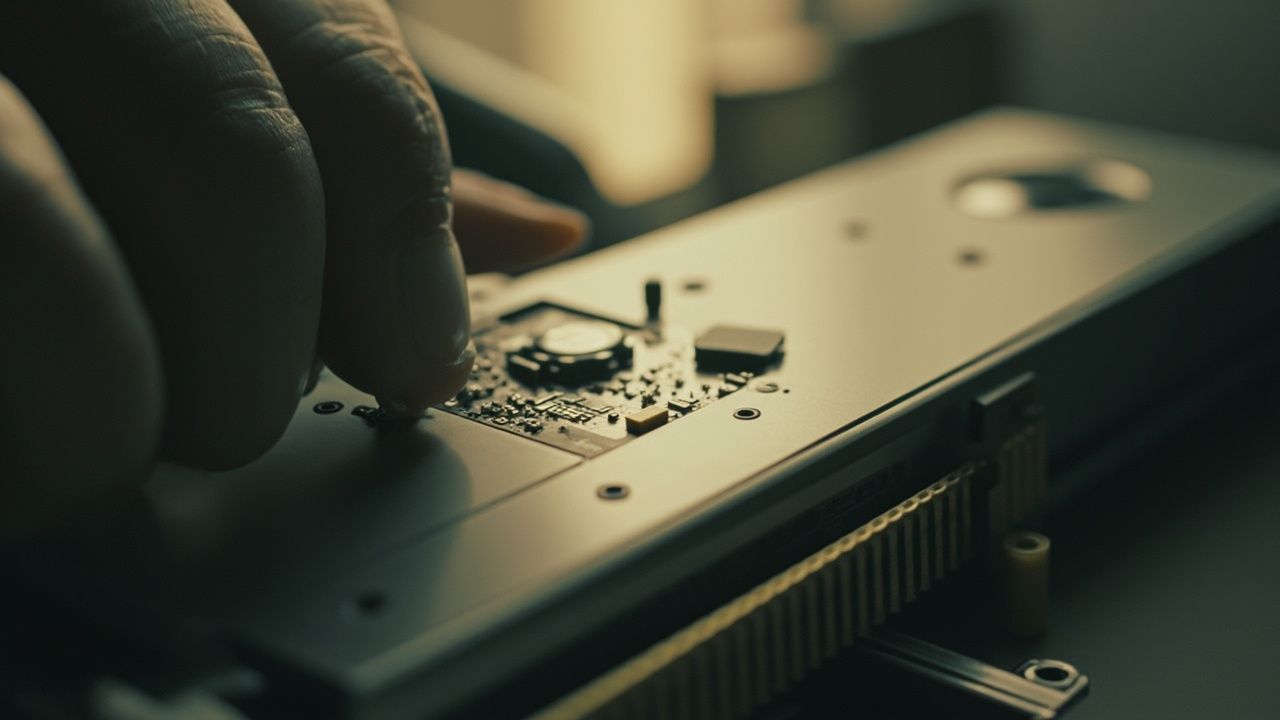
Assembly Sequencing on the Line Failure Modes Seen on Smart Lock Projects
On a supplier qualification visit, the most revealing part of a smart lock is often the route its parts take before anyone presses a fingerprint sensor or enters a passcode. Assembly sequencing on the line failure modes become easiest to recognize when the buyer follows one unit backward from the packing bench: where the lock body met the spindle, when the motor and gearbox met the latch or bolt drive, and what check was supposed to prevent a mismatch. The scene below is an illustrative qualification walk, not a named customer case. It shows why a finished display unit can look convincing while a repeatable project failure is still waiting in the order.
Direct answer. The short answer is that assembly sequencing on the line failure modes is not one decision. It is a sequence. This article takes assembly sequencing on the line failure modes from assembly sequencing on the line failure modes through assembly-sequencing-on-the-line to the record you keep. An assembly sequencing on the line failure modes is the engineering view of one component. assembly sequencing on the line failure modes is the behaviour that has to be reproduced. Then assembly sequencing on the line failure modes can be signed off.
The walk begins at the interfaces
On a mixed smart-lock line, one assembly does not become every model by changing the panel finish. The first-party catalogue contains 79 published models: RFID/IC card appears in 72, mechanical override key in 63, passcode/keypad in 55, and mobile app in 41. Those combinations change the work around the escutcheon, lock body, mortise case, cylinder, spindle, reader, control PCB, and power compartment. The line manager’s task is to keep every model route visible without letting one route quietly become the default for another.
Critical interfaces deserve priority. The latch and bolt drive must agree with the mortise case; the cylinder collar or rose must align with the cylinder; the spindle must connect to the intended handle or lever; and the strike plate must suit the latch and strike keeper. A smart lock assembly sequence is not a list of tightening operations but a map of dependencies. Install too early and a later operation can disturb the interface; install too late and the worker may force a component past wiring, a panel, or the spindle.
Where the line creates its own defect
Consider the first unit in an illustrative walkthrough. The keypad looks correct, the RFID reader is seated, and the control PCB answers at the test station. Yet the handle turns with a gritty drag. Tracing the route reveals that the lock body was built, the panel and wiring were added, and the spindle was installed without a first-piece check of the cylinder-to-latch relationship. No single careless worker caused the unit. The sequence permitted a conflict to reach the end of the line.
This is the practical meaning of production line failure modes: the visible defect may sit far from the operation that created it. A loose connector may reflect harness routing. A latch that fails to retract may reflect gearbox alignment or an undefined orientation. A reader that fails to recognize a credential may reflect panel strain on an internal connection rather than the reader itself. Swap-at-fault can hide the cause and teach the line the wrong lesson.
That is why model-specific evidence matters. The cited record for the SLK-9936S hotel lock lists 36–100 mm applicable door thickness, a 5-pin cylinder, a 3-point latch, and RFID/IC card capability. Confirm on the dated product page for the specific SKU before using those figures in a fixture, approval, or purchase decision. The sequence question is physical: can those components be assembled and inspected without creating an interface that a bench test cannot reveal?
| Observed line symptom | Sequence-related hypothesis | Evidence to request | Immediate disposition |
|---|---|---|---|
| Handle turns with drag or latch will not retract | Spindle, cylinder, latch, or drive was installed without interface confirmation | Current drawing plus first-piece dimensional and actuation record | Hold the build and inspect the joint |
| Powered command is received but the bolt does not move | Motor, gearbox, or latch/bolt drive orientation was not controlled | End-of-line actuation trace and applicable assembly instruction | Quarantine the affected route and retest |
| Reader becomes intermittent after panel closure | Harness routing or connector seating changed during a later operation | Continuity and power trace linked to the build traveler | Inspect the assembly rather than closing by module swap alone |
| Door engagement varies between physical samples | Body, latch, strike plate, or strike keeper was checked away from the intended door set | Door-set fit record showing the fixture and acceptance condition | Correct the fixture or route before release |
Reading the failure backward
Begin a supplier assembly sequence review by asking the line to show one recent failure rather than start with a polished demonstration. Let the team walk backward from the symptom to the first point where the condition changed. Was it present after the mortise case entered the cell, after the control PCB was connected, or only after the escutcheon closed? Does it repeat on one model variant, door set, or station? These questions separate a product issue from a route issue without pretending one narrative explains every unit.
A focused lock body assembly inspection should be tied to the actual work instruction. Ask which interface receives the check, what sample is retained, and who signs a deviation. The answer is more useful when it names the lock body, mortise case, latch, deadbolt, strike plate, spindle, cylinder, motor and gearbox, and drive components that the sequence joins. For file control, carry the label assembly-sequencing-on-the-line on the corrective-action request, then add the physical symptom and model.
When the sequence reaches the building
In an illustrative hotel qualification, a manager reports that one door needs a nudge before the latch retracts. The supplier can prove that the lock passed its bench test, but that test did not include the frame. The project team uses the Office Smart Lock Site Survey method to capture the actual door set, then compares backset, latch, strike plate, and strike keeper with the assembly route. The failure mode is not “the lock is loose”; it is “the released unit was checked without the interface that determines engagement.”
In a retrofit qualification, the evidence is already waiting in the building. The Smart Lock Retrofit Site Survey must be compared with the lock body and mortise case being built. If the door leaf rebate, frame depth, or existing hardware was not captured before sequencing, a consistent factory route can still produce an incompatible project outcome. The Assembly Sequencing on the Line and Door Compatibility: The Fit Envelope is relevant because fit is where a paper sequence meets the building.
Both scenes suggest a discipline for mixed portfolios: do not repair the symptom by changing only the last station. Trace the unit from the first incompatible operation, decide whether the instruction, fixture, component, or project input was wrong, then define the evidence needed to release that route again.
A release gate instead of a final inspection
At a well-designed cell, sequence checks become gates rather than final inspection. The purpose of end-of-line testing for smart locks is not to approve a unit assembled in the wrong order; it is to confirm a unit that followed a controlled route. The buyer should look for holds, retest rules, and failure records as much as pass results.
flowchart TD
    A[Incoming part identity checked] --> B[Critical mechanical interface assembled]
    B --> C[Powered and manual actuation checked]
    C --> D[Door and strike fit checked]
    D --> E[End of line release]
    C --> F[Hold unit and open failure record]
    D --> F
Each gate should answer two questions: what condition must be true before the unit moves, and where does it go when the condition fails? If a mechanical check belongs before closure of the panel, a closed escutcheon should not conceal the fit. If the drive must be exercised in both directions, the record should identify that check. If door compatibility matters to the project, qualification should use the intended door, frame, and strike rather than a loose bench fixture.
Evidence that survives the factory visit
The companion briefing on Assembly Sequencing on the Line Test Evidence a Buyer Can Actually Request is about proof rather than promise. Ask for the current sequence map for each model family, work-instruction revision control, first-piece records, inspection criteria, deviation handling, retest instructions, and a traceable link between a failed unit and corrective action. These are process records, not a request to expose confidential product design.
The questions become sharper when compared with Assembly Sequencing on the Line Trade-Offs: Cost, Durability and Service. A route that protects one interface may make another operation harder. Document the reason for a nonstandard order, the risk it controls, and how the change reaches the floor. For claims written in a supplier document, use Reading Assembly Sequencing on the Line Claims in a Supplier Datasheet to separate measured sequence requirements from generic language.
A scorecard that produces a qualification decision
A qualification scorecard should force a decision, not decorate a presentation. The buyer needs to know which evidence makes a model route approvable, which missing record creates a hold, and what can be closed later during assembly sequencing qualification. The following worksheet is intentionally evidence-led.
| Qualification criterion | Decision-grade evidence | If evidence is absent | Buyer action |
|---|---|---|---|
| Model-specific sequence route | Current route mapped to the model and work-instruction revision | A station may use an inherited route | Witness the build and withhold route approval |
| Critical interface control | First-piece dimensional and functional record tied to the model | An interface conflict can reach end of line | Require a first-piece review |
| Deviation handling | Hold location, disposition, and retest link | A repeated failure cannot be closed | Require disposition before release |
| End-of-line coverage | Test method, acceptance record, and retest rule | The scope of a pass result is unclear | Request the missing test evidence |
| Project fit | Sample linked to the intended door set | A factory result may not transfer to the building | Test with the project door set |
Use the scorecard at model-family level, not as a blanket judgement on the whole factory. One route can be controlled while another inherited route is not. Mark each evidence gap by model, process step, and owner; that makes the next action specific.
Serviceability is visible in the order
Assembly order follows the lock into service. If replacing the motor and gearbox requires disturbing the reader panel and control PCB, a route designed only for first-pass assembly can raise service effort. If the battery or cell compartment is closed after wiring, its contact condition may be harder to inspect. If the strike plate is installed late, technicians may need to remove an escutcheon to correct a latch issue. These are design and sequence observations, not assertions about a named model’s service life.
That is the focus of Maintenance Implications of Assembly Sequencing on the Line Choices. The qualification question is straightforward: can the intended maintenance operation be performed in the sequence the product documentation and technician actually use? Ask for service assumptions to be compared with the assembly route, especially around the lock body/mortise, latch or bolt drive, reader, wiring, and mechanical override access. A sequence that passes production but creates a buried service step should remain a visible risk.
The conversation to have before approval
Use the next supplier meeting as a walk, not a slide review. Bring the intended model mix, door types, access methods, and field symptoms. Ask the line owner to choose representative units and demonstrate the first-piece check, station hold rule, end-of-line test, and route taken after a failed result. The buyer can then ask linked questions: Which failure does each critical operation prevent? What proves it occurred? How are orientation and build records controlled? Where is a nonconforming unit held? Can the intended door set reproduce the acceptance condition?
Those questions create a common language between engineering and production. The factory need not defend a universal assembly sequence, and the integrator need not reconstruct one from a finished sample. They need a controlled route for the qualified model, evidence that the route was followed, and a clear consequence when it was not. That is stronger than a polished display and a pass sheet.
Approval should follow the evidence
By the end of the walk, the factory appears as a set of dependencies: a reader depends on strain-free wiring, a spindle depends on cylinder and latch alignment, a project door depends on the strike and frame, and a release record depends on a defined test route. That is why assembly sequencing on the line failure modes belong in qualification rather than in a troubleshooting appendix after shipment.
The same question is worked through in more detail in smart lock app vs pin access. That is the same question assembly sequencing on the line failure modes has to answer here.For a system integrator, send the intended model mix, door schedule, access methods, and symptom history with a request for a sequence review and controlled sample build. Keep approval conditional on the model-specific process records and first-piece evidence discussed here. Qualification succeeds when the factory can explain not only that a lock works, but why the chosen assembly route makes that result repeatable.
Ask for the offer against the same requirement: request a quote.