
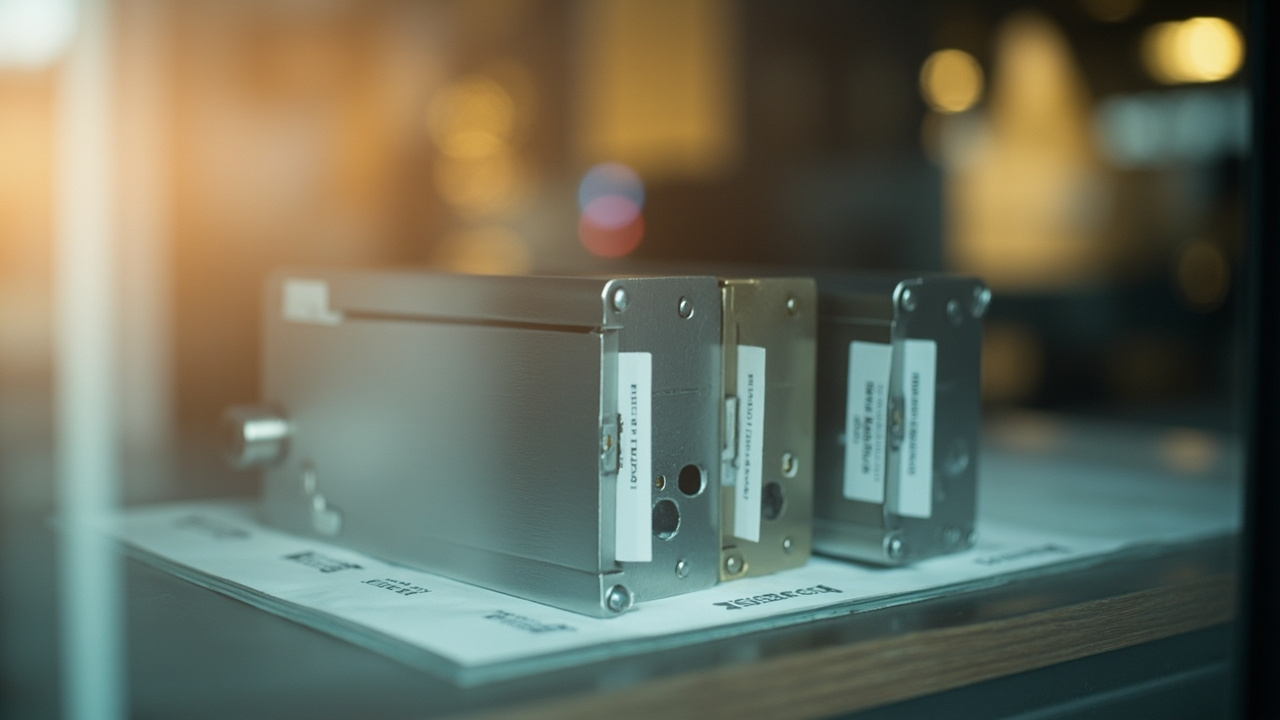
Centralised Database Versus Cylindrical Lock Body: Decision Matrix for Independent Boutique Hotels Operators
This datasheet sets out the centralised database versus cylindrical body boutique hotels matrix as two separate fields in a lock specification. A centralised database describes how credentials are issued, validated and logged. A cylindrical lock body describes the mechanism inside the door leaf. Treating the two as one choice is how a door survey finds the mismatch after the order.
Direct answer. The one-line answer — centralised database versus cylindrical body boutique hotels matrix is the working record for centralised database versus cylindrical body boutique hotels matrix. centralised database versus cylindrical body boutique hotels matrix is worthless until cylindrical-body is attached to it as evidence. A centralised database versus cylindrical body boutique hotels matrix scores alternatives against criteria a buyer can defend. centralised database versus cylindrical body boutique hotels matrix is the criterion that eliminates the most centralised database versus cylindrical body boutique hotels matrix candidates.
centralised database versus cylindrical body boutique hotels matrix is used here in the narrow sense set out in centralised database versus cylindrical body boutique hotels matrix. It is a working definition built for centralised database versus cylindrical body boutique hotels matrix. It is not a statutory one, and it has to be read against the market and product concerned.
Fields and scope covered here
The buyer is a procurement manager evaluating a lock programme for an independent boutique property, so every value here is a field to confirm. The anchor data comes from the catalogue record for the SLK-9936S hotel lock, and any value that drives a purchase decision must be confirmed on the dated product page for the specific SKU.
Why the two fields are not alternatives
A database is a management choice; a body is a mechanical choice. The same cylindrical lock body retrofit can sit inside a standalone lock or inside a networked lock reporting to PC hotel lock management software, so the pair is never either/or.
Reading the matrix
Read the centralised database versus cylindrical body boutique hotels matrix by door programme rather than by product. Each row is a property condition, the middle columns show which way it pushes the decision, and the last column names the failure that row invites.
| Property condition | Centralised database suits | Cylindrical body suits | Watch-out |
|---|---|---|---|
| 30 to 80 rooms, one reception | live floor permissions and one unlock records view | original leaves, reusable cylinders | a database that stops reporting beats none |
| 8 to 25 rooms, no night desk | codes issued and collected at the desk | rooms keep a key, shopfront a keypad | codes left open after a walk-out |
| Heritage building, mixed door thickness | survey before any body choice | bodies specified per leaf | one thickness assumed across the building |
| A building that cannot be rewired | the lock reports over the existing network | the lock runs offline, log downloads later | rewiring the landlord will not approve |
Annotated fields on the database side
A centralised database hotel lock adds a software dependency to the estate, so its fields concern continuity at the desk rather than steelwork. This is the standalone versus networked hotel lock decision, and the RFID hotel card reader choice sits beside it: one card family keeps re-issue simple.
| Field | Published example | Annotation |
|---|---|---|
| management mode | standalone or centralised database modes | set per door group, not the whole property |
| card platform | RFID Mifare 1 at 13.56 MHz | one card family for guest, staff and service doors |
| audit and event records | up to 1,000 records | ask how the log exports and how long it is kept |
| management platform | multilingual management software | confirm the desk login path and export per SKU |
Confirm on the dated product page for the specific SKU.
Annotated fields on the body side
The body side is settled on a door survey, leaf by leaf, and the Smart Lock Retrofit Site Survey is a usable starting point. A cylindrical lock body retrofit keeps the existing keyway and the visible escutcheon where the leaf allows it. These values are confirmed on the dated product page for the specific SKU.
| Field | Published example | Annotation |
|---|---|---|
| lock body and mortise | 5-pin cylinder with 3-point latch | ask whether the body is cylinder-led or mortise-led |
| applicable door thickness | 36 to 100 mm | measure every leaf; mixed thickness is normal |
| cylinder | 5-pin cylinder | decide whether the existing keyway stays serviceable |
| panel and body material | stainless steel and alloy body | exterior doors set the material question |
| power | 4 x AA | carry spare cells; batteries fail at checkout, not mid-stay |
Door groups that force each route
Door groups are not interchangeable, and each one answers the two fields differently. The measurements that separate them are the ones captured in the Office Smart Lock Site Survey.
| Door group | Access pattern | Body route | Database route |
|---|---|---|---|
| Guest rooms | card or code at the room | chosen per leaf in the survey | per floor and per stay |
| Service corridor | keypad on service doors | surface case, minimal cut | report staff access centrally |
| Shopfront | phone at the shopfront | cylinder-led, existing keyway | standalone, no live reporting |
| Terrace | time-limited access | weatherproof housing required, narrow profile | standalone |
The path from survey to shortlist
The path runs from the leaf to the shortlist, not from the catalogue to the order. Each branch either keeps the existing door or forces a body change, and ends with a management mode that fits the staffing on that door group.
flowchart TD
    A[Leaf measurement] --> B{Cylinder reusable}
    B -->|Yes| C[Keep the existing door]
    B -->|No| D[Plan a body change]
    C --> E{Front desk reporting needed}
    D --> E
    E -->|Yes| F[Centralised database mode]
    E -->|No| G[Standalone lock with offline log]
    F --> H[Sample on the worst case leaf]
    G --> H
Evidence to demand before a pilot
Ask for dimension drawings, the installation guide and the datasheet for the exact body quoted. For a centralised database hotel lock, request the audit export format and the overnight behaviour with no workstation. For a cylindrical lock body retrofit, request the backset options and the tolerance for an existing rebate. Order two samples, one on a worst-case leaf and one on a typical room door, and measure both.
CONFIRM-WITH-LOCAL-AUTHORITY: confirm which authority signs off on escape and hold-open arrangements for the serviced doors, and confirm the landlord's position on modifying the existing locks before a cylinder is changed.
The field sheet to carry into the survey
Take the measurement method from the Office Smart Lock Site Survey and the retrofit points from the Smart Lock Retrofit Site Survey instead of drafting a new sheet. The clause-level treatment of the same pair, Centralised Database Versus Cylindrical Lock Body: Which Fits a Independent Boutique Hotels Door Programme, belongs in the same boutique hotel door survey set.
Next step at the evaluation stage
At evaluation stage the deliverable is a shortlist with two columns: body route per door group and management mode per door group. Send it with the survey results, ask for the dated product pages for the SKUs in the shortlist, and request a quotation for the sample pair and pilot doors through the quote request page.