
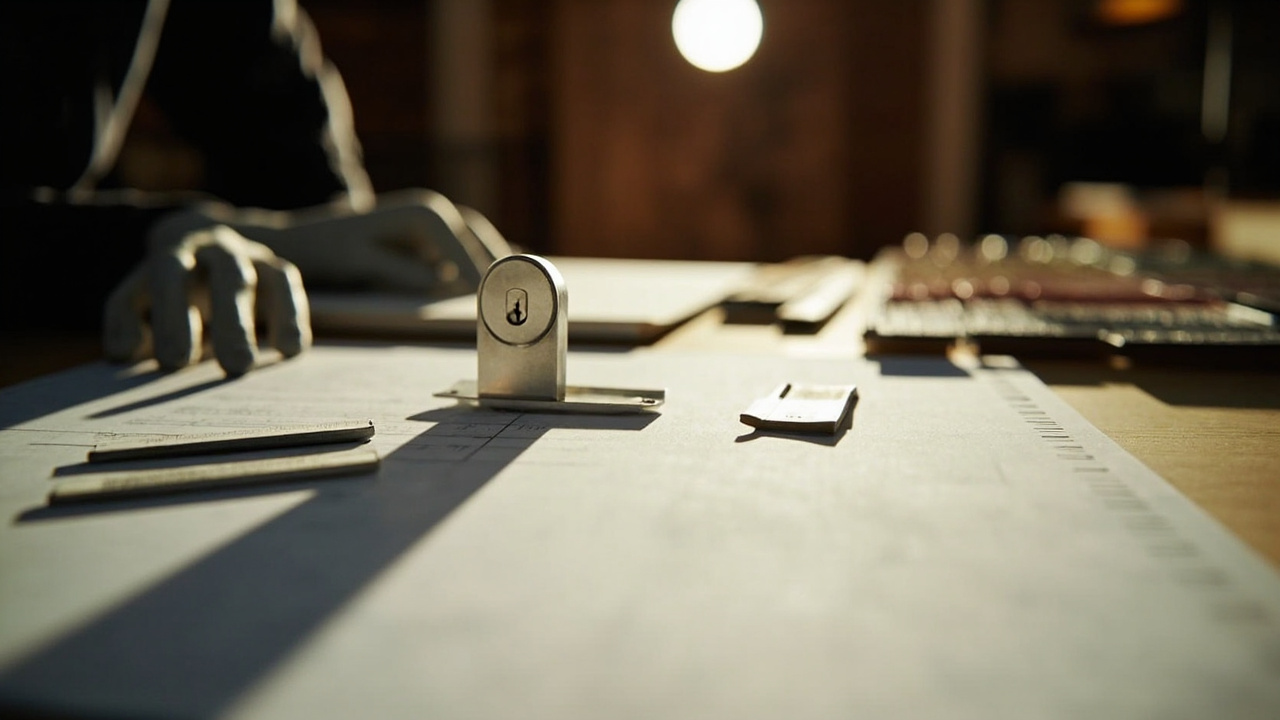
Finish and Aesthetic Coordination: Reviewer Checklist
Use this finish and aesthetic coordination reviewer checklist when a lock, reader, escutcheon, or related door-hardware item is offered against a finish requirement. It controls the finish-review stage only; it is not a general product approval. The reviewer confirms that the finish reference, physical sample, and handling instructions form a traceable decision the project team can repeat.
Direct answer. The short answer is that finish and aesthetic coordination reviewer checklist is not one decision. It is a sequence. This article takes finish and aesthetic coordination reviewer checklist from finish and aesthetic coordination reviewer checklist through finish-and-aesthetic-coordination to the record you keep. A finish and aesthetic coordination reviewer checklist is a working pack for the people who write the requirement. finish and aesthetic coordination reviewer checklist is the first section handed over. Every finish and aesthetic coordination reviewer checklist template comes with it.
finish and aesthetic coordination reviewer checklist is used here in the sense given under finish and aesthetic coordination reviewer checklist. It is a working definition of finish and aesthetic coordination reviewer checklist that carries no regulatory weight. The buyer still has to check it against the dated product page.
Start with the approved door-hardware schedule, the supplier’s current submittal, and the physical mock-up. Name the requester, decision authority, and revision under review. A photograph shows the finish; it does not specify it. Use images as supporting views, never as the approval record.
Produce the review record, approved finish reference, protection instruction, and closeout actions. The submittal is not approved until the review is recorded and dated.
Establish the review boundary and named roles Close the loop
Keep finish approval separate from fit and performance approval. A physical mock-up review can evidence appearance and some fit conditions; it does not prove installed performance. Require a RAL and colour reference, the supplier’s production finish code, and a sample identifier connecting the physical item to the submittal. The earlier published note on this is Glass Door Smart Lock Price Guide. Every commercial claim here has to be checked against the smart door locks.
| Role | Responsibility | Required output |
|---|---|---|
| Review coordinator | Checks package completeness | Routes or returns the package |
| Finish approver | Compares references and sample | Signs the decision |
| Installer coordinator | Applies agreed handling | Confirms receipt |
| Document controller | Stores revisions and handover records | Maintains the controlled record |
Use this split to ensure that each participant supplies evidence rather than transferring responsibility through an informal approval.
flowchart TD
A[Receive package] --> B[Check references]
B --> C[Compare physical sample]
C --> D[Record decision]
D --> E[Issue protection instruction]
E --> F[Verify installed match]
Accept only a complete review package
Reject an incomplete door hardware submittal as “revise and resubmit,” naming each missing field. A generic brochure does not identify the variant, finish, sample, or door set under review.
The package should contain:
- The specific SKU and proposed door-hardware schedule line.
- The approved RAL or other colour reference and supplier production finish code.
- The physical sample identifier, date received, and supporting photograph views.
- The finish composition or surface-treatment description, supported by supplier evidence.
- Protection instructions covering packaging, storage, site handling, and installation.
CONFIRM-PER-SUPPLIER: Confirm on the dated product page for the specific SKU which finish or colour reference is available; treat the supplier’s production code as the controlling evidence for the offered variant.
Use Finish and Aesthetic Coordination: Documents a Specifier Should Demand when a package needs a more detailed document request.
Run the finish and aesthetic coordination reviewer checklist
Review the sample under lighting that resembles the project condition. Place relevant samples side by side and compare the lock’s exposed surfaces with the adjacent door and frame references. Inspect edges, touch points, component interfaces, and coating transitions. Record visible differences instead of converting a preference into an approval.
Mark the sample identifier, accepted reference, observations, and the person authorised to accept a deviation. The finish sample approval covers appearance under review, not long-term appearance. If the sample cannot be connected to the production item, stop at “not approved.”
Use Finish and Aesthetic Coordination: A Smart Lock Specifier Guide as the working record for identifiers and review notes.
Convert observations into a decision table
Use explicit conditions so another reviewer can repeat the decision.
| Review condition | Accept when | Decision | Record required |
|---|---|---|---|
| Colour and production references agree | Both identifiers are stated and linked | Accept | Identifiers and sample ID |
| Physical sample matches approved reference | No unresolved mismatch is visible | Accept for finish review | Dated comparison record |
| Physical sample differs from approved reference | The difference is described and dispositioned | Revise or refer | Rationale and approver |
| Evidence is photograph-only | No identifiable physical sample is linked | Do not approve | Missing evidence noted |
Use “hold” only when the missing evidence has an owner and a defined corrective action. Never convert an unresolved difference into a verbal pass.
Issue a revision-specific approval
The approval note should identify the submittal revision, specific SKU, door-hardware schedule line, approved RAL or other colour reference, production finish code, and sample identifier. State exactly which components were reviewed. List any accepted variation separately from the base finish.
Attach the comparison decision and a photograph set marked as visual support. Name the approver and date the record. If an architect, client representative, or consultant has review authority, capture that decision in the same controlled revision rather than forwarding an informal message. This keeps the finish choice readable by the installer and document controller.
Issue finish protection as a separate instruction
Finish protection starts when the accepted sample leaves the review meeting. State which surfaces may be touched during handling, where the item may be stored, how packaging should be removed, and when protection should remain in place. Assign responsibility for checking the item on receipt and before installation.
Readers comparing approaches usually start with smart lock supply chain management. That is the same question finish and aesthetic coordination reviewer checklist has to answer here.Coordinate the instruction with Finish and Aesthetic Coordination: Coordination Between Architect and Supplier. Store the instruction with the approved finish record, not as an informal note. If packaging or site conditions differ from the reviewed sample, record the deviation before installation. This protects the decision from being lost between approval and handover.
This overlaps with the earlier coverage in smart locks for shopping centers. That is the same question finish and aesthetic coordination reviewer checklist has to answer here.
Verify the installed match and transfer the record
Before final acceptance, compare the installed item with the approved reference under the agreed viewing condition. Record the door identifier, installed item, reviewer, result, and any unresolved mismatch. A corrective action must identify its owner and the evidence that closes it.
At handover, give the document controller the approved reference, sample decision, protection record, and installation comparison. The client’s document owner then receives a traceable record rather than a memory of the meeting. Use Finish and Aesthetic Coordination: What Goes Wrong on Smart Lock Projects to identify missing ownership or evidence. Send the completed package to the selected supplier for confirmation before release, and complete the finish review only when the record has an owner, location, and retention instruction.
Nothing is binding until a supplier prices it, so request a quote.