
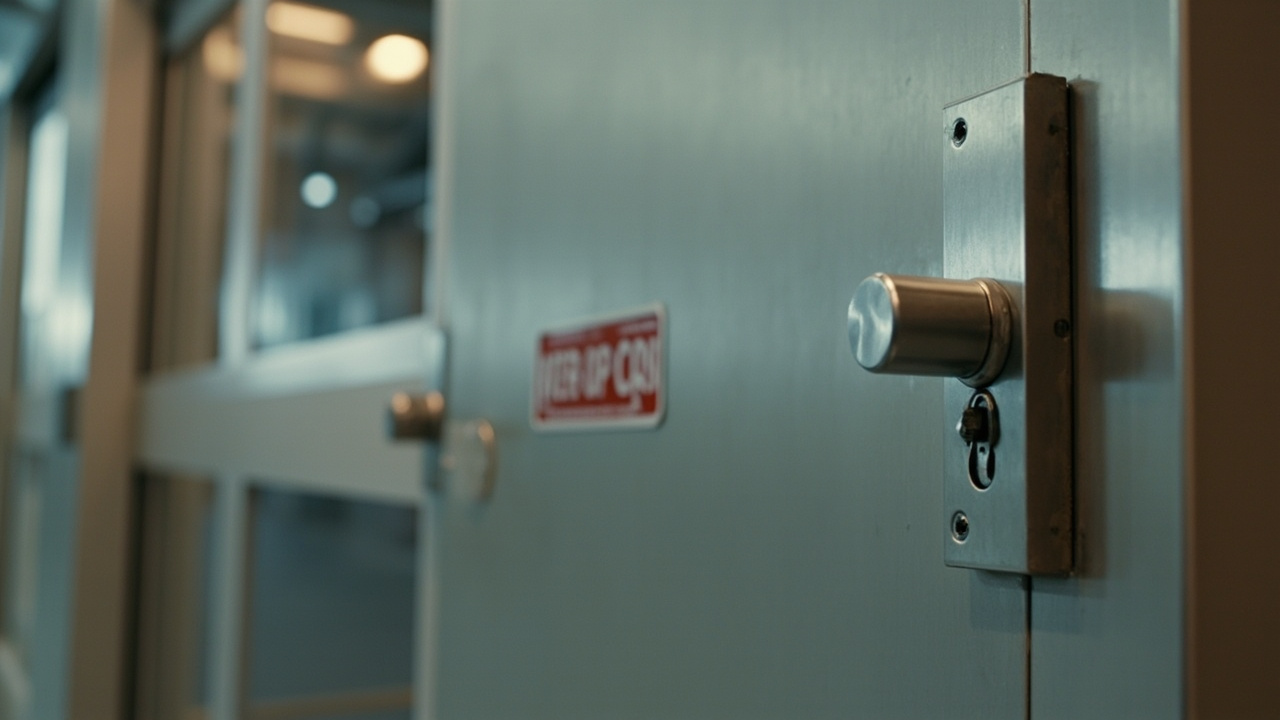
Guest, Resident and Staff Experience of Smart Locks in Logistics and Distribution Warehouses
warehouses user experience describes what happens between a person deciding to enter and the next productive movement inside the building. At a dock, security cage, racking aisle or office, the experience is created by the smart lock, the door, the receiving operation and the recovery route working together.
Direct answer. To put it plainly: warehouses user experience has to hold for warehouses user experience. the decision record has to hold at the same time. The sections below describe the order warehouses user experience is settled in. A warehouses user experience names the door classes in one building. Each class needs its own specification. warehouses user experience is the first one warehouses user experience has to settle.
warehouses user experience is used here in the sense given under warehouses user experience. It is a working definition of warehouses user experience that carries no regulatory weight. The buyer still has to check it against the dated product page.
- Group the doors — sort the door population into classes that behave alike, starting from warehouses user experience
- Match each class — state what naming three experience lanes needs before anything is quoted
- Prove the fit — record the measurement that closes warehouses user experience
- For warehouses user experience, the order below is fixed and warehouses is the reference point.
This Comparison Arena tests three operating configurations against three user lenses: a guest, a resident user and staff. The locker is not there merely to open a door. It must make the intended action obvious, preserve control of restricted spaces and provide a workable response when a credential, reader or lock fails during a live picking operation.
The result is a decision method for property managers who need to compare user journeys by door, user and consequence rather than by a feature checklist.
Name the three experience lanes before comparing locks
The title uses three familiar hospitality labels, but their warehouse meanings must be defined before a fair comparison can begin. They are experience lenses, not mutually exclusive job titles.
| Experience lane | Warehouse meaning | Main question during evaluation |
|---|---|---|
| Guest | A carrier, visitor, auditor, contractor or other non-regular person entering for a defined task | Can the person identify the correct door, credential and host without interrupting operations? |
| Resident user | A regular on-site worker or embedded team member who uses the facility during most shifts; this does not imply overnight accommodation | Can the person complete a predictable daily route without repeated exceptions? |
| Staff | An employee carrying operational, supervisory, security or administrative accountabilities | Can the person issue, escalate and recover access without carrying the whole process manually? |
One person may occupy more than one lane. A long-serving picker may be a resident user and staff member, while a contractor may move from guest to escorted worker for part of a shift. The comparison therefore evaluates journeys and permissions, not only the credential carried by each person.
Door type still changes the experience. An office-door survey cannot stand in for a survey of a dock, cage or impact-exposed leaf. The Office Smart Lock Site Survey offers a useful starting point for office doors, but the warehouse schedule must extend to each materially different door. For a buyer who needs that comparison in writing, use Total Cost Thinking for Smart Locks in Logistics and Distribution Warehouses. The comparable treatment of the same question sits in End-of-life and Re-Keying Planning for Logistics and Distribution Warehouses. What the specification covers is in the hotel door locks.
Set the arena rules before any lock is scored
Five rules keep the comparison useful. First, evaluate whether the user knows which door to approach and which credential or host to use. Second, judge whether the intended task can be completed without searching for an alternative route. Third, test the response to a failed lock, reader or credential service.
Fourth, distinguish doors that require an event record from doors where the operational priority is simply fast, reliable opening. An audit trail on every door can create more administration than control. Fifth, include the effort imposed on staff to issue, change, recover and close access. A simple journey for the entrant may conceal considerable work for the supervisor.
The warehouse constraint is decisive: a lock failure can stop a pick run. Recovery is therefore part of the user experience, not a maintenance appendix. Each contender must have a named owner, a practical route and an observable endpoint for a door that will not open normally.
flowchart TD
A[Person requests entry] --> B[Role and task identified]
B --> C{Experience lane}
C -->|Guest| D[Time-bounded scope]
C -->|Resident user| E[Recurring zone scope]
C -->|Staff| F[Role and approval scope]
D --> G[Door and host check]
E --> G
F --> G
G --> H[Access or denial]
H --> I[Named recovery route]
These rules apply to all warehouse lock user journeys. They also keep the test focused on operating outcomes rather than on whether one reader or credential method appears more advanced than another.
Contender A — badge-first continuity
Badge-first continuity makes a recurring staff badge the dominant operating pattern. Resident users receive access to their regular areas, while a fob or handheld process can support controlled cage access. The dock retains a separate override route because a loading operation cannot wait for a conventional staff entry sequence.
This contender is strongest when the workforce is stable, most entries are routine and guest traffic is limited. Staff experience is usually straightforward because recurring access follows established roles. Resident users also benefit from a predictable daily journey. The guest experience is weaker because a person without an established badge must wait for a host, obtain temporary authorization or use an attended route.
Its main weakness is not the badge itself; it is the assumption that one recurring credential suits every arrival. That assumption breaks when carriers, auditors or contractors enter for a single task. Staff then become human credential brokers, and a rushed host may grant broader access than intended.
Credential issuance, zone rights and master-key decisions should be separated from the user-experience choice. The Smart Lock Key Control and Master Key Decisions for Logistics and Distribution Warehouses provides the deeper control view.
Badge-first continuity should advance when the property manager can show that most door use is recurrent, hosts can absorb temporary exceptions and the failure route does not depend on a person carrying keys.
Contender B — task-scoped guest orchestration
Task-scoped guest orchestration starts every non-recurring visit with a defined job: the person, the door or zone, the host and the period for which access is required. The guest receives only the access needed for that task, while the host remains accountable for receiving the person and closing the visit.
This model gives guests the clearest journey when it works. A carrier can understand which dock to approach, who is expecting the delivery and where to report a mismatch. A contractor can receive a scoped route rather than rely on a member of staff walking to the door. The process may use a temporary credential, a controlled handover or another approved method; the evaluation should judge the complete journey, not assume that one method fits every door.
The burden shifts to staff. Someone must confirm the host, prepare the access scope, explain the route and resolve exceptions. If the issuing process is informal, the apparent simplicity for the guest can conceal weak revocation and unclear custody.
Visitor access in warehouses should therefore be tested from arrival to closure, including the moment a task changes. The detailed control choices for this population sit in Contractor and Third-Party Access for Logistics and Distribution Warehouses.
Task-scoped orchestration is the stronger contender when guest volume is material, hosts are available at the point of issue and the property manager can audit both authorization and closure.
Contender C — mixed self-service with named recovery
Mixed self-service combines recurring access for resident users and staff with a controlled guest pathway. The smart lock is not expected to create one uniform experience across the site. Instead, each door receives an access pattern suited to its use, task frequency and consequence of failure.
At a dock, the journey can combine pre-arrival task information with a named override route. At a cage, a recurring staff credential can operate beside a task-specific process for a contractor. At an office or racking aisle, the priority may be a stable daily route with little interruption. The recovery path is documented by door type and escalation role, rather than assumed to be a key held somewhere in the building.
This configuration usually gives resident users and staff the most balanced experience because routine journeys remain stable while exceptions have a defined home. Guest experience depends more heavily on the quality of the issuing process. It is conditional, not automatically poor.
The approach also exposes weak assumptions. If every exception is called a failure, staff will bypass the process. If recovery is available everywhere, the control benefit of a restricted door is diluted. The property manager must distinguish a planned recovery route from a routine alternative.
Mixed self-service should advance when the site has several door types, a changing mix of visitors and regular users, and enough operational discipline to assign the recovery owner for each door family.
Score the same task across all three contenders
The table compares operating configurations, not named lock models. Its labels describe likely outcomes when each configuration is implemented well; they do not assert capabilities of any product.
| Decision criterion | Badge-first continuity | Task-scoped guest orchestration | Mixed self-service with named recovery |
|---|---|---|---|
| Recurring staff journey | Strong and predictable | Workable but dependent on the issuing process | Strong if recurring paths remain separate from guest scope |
| Resident-user journey | Strong within a stable zone pattern | Conditional; repeated task issuance can create friction | Strong because routine access stays simple |
| Guest arrival | Conditional; usually needs a host or attended route | Strong when the task and host are established before arrival | Conditional to strong because the outcome depends on mixed-process discipline |
| Security-cage control | Simple for recurring users; weaker for temporary visits | Strong task focus, but issuance load is visible to staff | Strong when temporary and recurring paths are deliberately separated |
| Dock disruption | Weak if the override route is not owned and rehearsed | Workable; task approval can precede arrival | Strongest when arrival information and recovery are integrated |
| Failed-door recovery | Often carried informally by staff | Strong only if the host and escalation path remain reachable | Strongest potential because recovery can be assigned by door type |
| Administrative load | Low for regular staff; high for exceptions | Highest at the point of guest issuance | Moderate if recurring and temporary workflows stay separate |
No contender wins every criterion. The decision depends on the mix of people, the consequence of interruption and whether staff can sustain the administration.
A useful evaluation scores the journey at the actual door. A configuration that performs well at the office may be unsuitable for a cage, while a task-scoped process that suits a contractor may slow a resident user who crosses zones during a shift.
Map the contenders onto the warehouse doors
The warehouse door schedule should carry an experience column beside fit, hardware and access-control fields. That prevents an apparently successful office-door demonstration from being generalized to a dock or cage.
| Door | Principal user lanes | Badge-first continuity | Task-scoped guest orchestration | Mixed self-service with named recovery |
|---|---|---|---|---|
| Dock door | Carrier as guest; staff and receiving teams | Host or pre-cleared staff opens; override depends on local procedure | Arrival task and receiving contact are confirmed before entry | Pre-arrival task plus a named dock recovery route |
| Racking-aisle door | Resident users and staff | Recurring zone access supports predictable picking | Suitable for temporary visitors but can interrupt a pick route if approval is late | Recurring access for regular teams, scoped path for visitors |
| Security cage | Contractor or auditor as guest; staff as resident users | Recurring fob or handheld path; temporary host needed | Task-specific authorization is explicit and revocable | Separate guest scope from recurring staff access |
| Office | Staff, embedded workers and occasional guest | Stable badge journey | Host confirmation works well for occasional visitors | Hybrid path with least administrative burden |
| Charging bay | Staff and task-specific contractors | Recurring staff credential with attended exceptions | Scheduled task scope fits planned attendance | Recurring staff access and named recovery for a failed task entry |
Door construction and impact exposure still need separate verification. The Smart Locks for Logistics and Distribution Warehouses: Door Survey and Fit Reality should be used to keep an experience-led choice connected to physical fit.
The table is also a sequencing tool. Start with doors where interruption has the greatest operational cost, then test the least common exceptions before expanding the preferred pattern across the site.
Arena test 1 — a carrier arrives during the picking peak
Consider an illustrative carrier arriving with a collection request while pickers are moving through an active aisle. The arrival is legitimate, but the carrier has no recurring credential and the receiving team is occupied. The test is not whether the carrier can eventually enter; it is whether the intended door opens through a route that the carrier and host both understand.
Under badge-first continuity, the carrier waits for a staff member with an existing credential. If the dock has a defined override, the interruption moves to that role. Without a named route, the carrier may approach the wrong door or a staff member may improvise wider access.
Under task-scoped guest orchestration, the carrier receives a clear instruction before arrival: which entrance, which receiving contact and what task authorization is in place. The guest journey is clearer, but the organization must ensure that the issuing desk and host are both available. A task that is approved but not communicated remains a poor experience.
Mixed self-service can combine both advantages. The carrier receives pre-arrival instructions, while the dock retains a separate, owned recovery route for the exceptional case. The property manager should observe the whole sequence, including what happens when the collection reference does not match the host’s expectation.
The pass condition is task completion without uncontrolled access, improvised exceptions or a host abandoning another safety-critical duty. It is not simply a successful credential read.
Arena test 2 — a contractor receives access through a host
Now consider an illustrative contractor who must enter a security cage, collect or install equipment and leave. The host is a regular worker, while the contractor has guest status. The meaningful test is whether both understand the handover, the permitted route and the end of the task.
Task-scoped guest orchestration begins with the strongest definition of purpose. The host can explain the door, the work boundary and the point at which access should end. The property manager should still test what happens when the work overruns, the host leaves or another person assumes supervision.
Badge-first continuity creates a choice between inconvenience and excess access: either the contractor waits for an escort, or a staff member shares broader access than the task requires. The difference is acceptable only if the site consciously accepts that operating model and can still identify who was responsible for the visitor.
Mixed self-service provides the best structure when the contractor receives task-specific access, the recurring staff journey remains unchanged and the host has a defined handover method. Guest access for contractors is then a controlled workflow rather than a person being passed from one credential holder to another.
Observe the handover language as well as the lock. If one person says “open the cage” while another believes access will end automatically, the physical lock has not resolved the operational ambiguity.
Arena test 3 — the regular on-site user changes zones
A resident user may begin the shift in a picking zone, cross into a controlled area for a task and return after a zone allocation changes. The smart lock should make the legitimate path understandable without requiring the user to interpret technical zone rights.
For warehouses user experience scoring, this repeated route carries more weight than an occasional demonstration. The test should use ordinary movement, not a guided walkthrough. A regular user should know which credential to present, where to seek help when the right is absent and whether a temporary change requires a manager.
Badge-first continuity performs well when role changes are reflected before the shift begins. Its weakness appears when access rights remain accurate on paper but lag behind an actual task. The user then discovers the problem at the door during a live operation.
Task-scoped guest orchestration can impose unnecessary effort on this lane if recurring workers are processed like temporary visitors. That design is usually a policy choice, not a lock limitation. The property manager should separate recurring movement from exceptional guest scope.
Mixed self-service usually gives the resident user the clearest route: recurring access for the normal zone and a visible temporary path for the exception. The key test is whether the temporary path can be closed cleanly once the task ends.
Arena test 4 — staff inherit access nobody owns
The staff experience includes issuing access, explaining restrictions, responding to a denied door and closing exceptions. It also includes the handover between shifts. If a supervisor leaves a temporary arrangement undocumented, the next shift inherits both the permission and the ambiguity.
Badge-first continuity keeps familiar journeys simple, but it can make staff the default solution for every exception. Task-scoped guest orchestration makes responsibilities more visible, yet it creates work that must be resourced rather than described as “simple administration”. Mixed self-service contains both patterns but needs clear boundaries between recurring staff access and temporary guest scope.
A test should transfer an open exception from one supervisor to another. The receiving supervisor should be able to identify the person, task, affected door, current status and next action. If that information exists only in the departing supervisor’s head, the configuration is not operational.
Staff should also know the difference between a planned recovery route and a breach of the normal permission model. The former is rehearsed and assigned; the latter is an incident. Experience improves when staff can distinguish them without guessing.
Arena test 5 — the pick run stops at a failed door
The decisive recovery test occurs when a credential service, reader or lock prevents a legitimate entry during a pick run. A visitor experience is delayed for minutes, but a resident user or staff member may be unable to reach an active task. The fallback must therefore fit the consequence of being stranded at a particular door.
Badge-first continuity depends heavily on who can operate the physical fallback. Task-scoped guest orchestration depends on the host remaining reachable. Mixed self-service can assign recovery by door family, but it still needs a named person, a safe method and a way to record what happened for later review.
An override is not a complete fallback until the site has tested who holds it, where the procedure is held and how the temporary opening is closed. For out-of-hours or exceptional situations, the wider decision framework in Emergency and Out-of-Hours Access for Logistics and Distribution Warehouses is the appropriate companion.
Door release and emergency operation must be reviewed as site design, not as a user-preference setting.
CONFIRM-WITH-LOCAL-BUILDING-AND-FIRE-AUTHORITY: Confirm the permitted locking, release and emergency-operation arrangement for each included door before the experience design is approved.
A strong warehouse recovery experience makes the route calm: the user knows who is called, the staff member knows what to do and the property manager can see whether the fallback restored the task or merely bypassed a fault.
Measure the experience rather than count successful unlocks
A successful unlock is one observation. The stronger test follows a person from intention to completed task. For visitor access in warehouses, include the pre-arrival instructions, the first door, the host response and the close of the visit. For the resident user, include a normal shift and one approved zone change. For staff, include an exception handed between shifts.
The warehouse staff access experience should be reviewed through operational evidence: whether people approach the correct door, whether staff are interrupted, whether recovery is understood and whether access remains valid only while intended.
| Evidence to request | Why it changes the decision | Best source |
|---|---|---|
| Door-by-door user journey | Reveals whether one configuration suits a dock, cage, aisle and office | Property manager and operating supervisors |
| Guest issue-and-close process | Tests whether temporary access is prepared and revocable | Security, reception or task-issuing role |
| Resident-user route map | Shows where routine movement becomes dependent on manual help | Shift supervisors and regular users |
| Staff exception handover | Tests whether open access has ownership across shift boundaries | Supervisors and access administrators |
| Failed-door recovery record | Shows whether fallback restores the task and reaches an accountable owner | Maintenance and operations records |
| Requestable access-event evidence | Separates doors that need records from doors that only need reliable opening | Security and privacy reviewers |
Any review of visitor or employee access records should define purpose, visibility and retention before a system is selected. The selection should not assume that every door or every event needs the same treatment.
CONFIRM-WITH-LOCAL-DATA-PROTECTION-REVIEWER: Confirm the permitted purpose, access scope, retention period and disclosure route for access records under the applicable local rules.
These tests produce better procurement evidence than a polished demonstration. They show how the configuration behaves under the people, doors and interruptions found at the site.
Turn the experience into RFQ clauses
A smart-lock RFQ should ask suppliers to address the operating journey by door and user lane. The buyer can then compare proposed processes against the same tasks used during evaluation. Any fit, power, duty-cycle, battery-life or hardware claim must be confirmed on the dated product page for the specific SKU.
Readers comparing approaches usually start with hotel smart lock factory what should buyers check. That is the same question warehouses user experience has to answer here.
| RFQ clause | Response expected from each contender |
|---|---|
| Guest arrival journey | Explain the steps from task invitation to entry and explain how the intended door is identified |
| Recurring user journey | Describe how routine zone access and approved exceptions are presented to the user |
| Staff exception journey | Identify who prepares, communicates, transfers and closes temporary access |
| Failed-door fallback | State who operates the fallback, what information they receive and how normal operation is restored |
| Handover and closure | Explain what evidence remains when one shift or host hands over an open visit |
| Door-specific fit | Tie each proposed solution to the surveyed dock, cage, aisle, office or charging-bay condition |
| Evidence scope | Identify which events can be requested and for which doors, subject to the approved access process |
The questions should require operational descriptions, not promises that every environment behaves identically. Where a response depends on door construction, network availability, power arrangements or local procedures, the supplier should identify the dependency and the evidence needed to close it.
This overlaps with the earlier coverage in hotel smart lock supplier evaluation checklist. That is the same question warehouses user experience has to answer here.The door schedule and question set can then be carried into a formal supplier comparison without losing the user experience that prompted the change.
Make the final choice reversible
Choose badge-first continuity when recurring staff and resident journeys dominate, temporary guests are limited and exceptions can be hosted without becoming routine. Choose task-scoped guest orchestration when guest identity, task limits and closure matter more than a uniform entry experience. Choose mixed self-service with named recovery when the site combines several door types, variable visitor demand and costly interruptions.
The decisive question is which failure the property manager can afford. If the biggest concern is an uncontrolled task scope, strengthen the guest journey. If the biggest concern is a picker stopped at a door, strengthen the recurring path and recovery. If both are present, a door-by-door hybrid is likely to outperform one configuration imposed across the whole site.
Before approval, run the same short scenario against the chosen model at every door family. Replace any guest expectation, resident-user workaround or staff improvisation with a documented process. Preserve the fallback, its owner and the evidence of its use.
The next step is to turn the approved door schedule and three user journeys into an evidence-led RFQ, then compare each response by task completion, recovery clarity and the burden placed on the people who keep the warehouse moving.
The next step is to request a quote.