
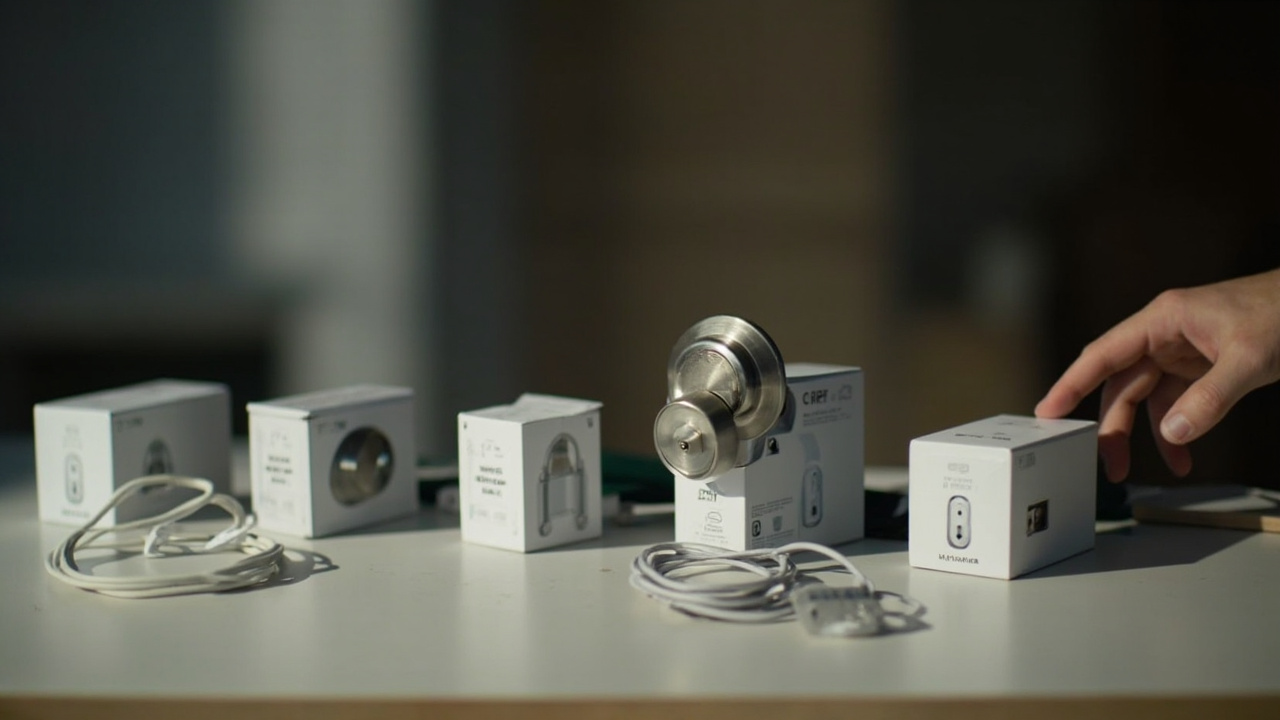
Fingerprint Versus Mortise Lock Body: Which Fits a Short-Term Rental Door Programme
Short-term rental buying teams often place “fingerprint access” and “mortise lock body” in one RFQ line, although they describe different layers of the door assembly. This fingerprint versus mortise body short term rentals comparison separates credential governance from mechanical fit. The practical answer is not a universal winner. For high-turnover entrances, prioritize a rotating credential that can be revoked and audited; use the fingerprint as an additional method for staff or owners. Then choose the body after measuring the door. The Fingerprint Versus Mortise Lock Body: Decision Matrix for Short-Term Rental Operators provides a scoring counterpart.
Direct answer. In short, fingerprint versus mortise body short term rentals comparison is the subject of this piece. fingerprint versus mortise body short term rentals comparison is where the work on fingerprint versus mortise body short term rentals comparison sits. mortise-body is what has to be evidenced before anyone signs. A fingerprint versus mortise body short term rentals comparison is a comparison written to be reused. Criteria are stated. fingerprint versus mortise body short term rentals comparison is where the fingerprint versus mortise body short term rentals comparison shortlist narrows.
fingerprint versus mortise body short term rentals comparison is used here in the narrow sense set out in fingerprint versus mortise body short term rentals comparison. It is a working definition built for fingerprint versus mortise body short term rentals comparison. It is not a statutory one, and it has to be read against the market and product concerned.
Separate the credential from the mechanical case
A fingerprint is an access method presented to a reader. A mortise body is the lock case installed in the door rebate, containing interfaces such as the spindle, latch or bolt, drive mechanism and strike. A complete smart lock may contain both, so treating them as interchangeable products can hide the actual decision.
| Decision layer | Fingerprint-focused option | Mortise-body-focused option | Procurement output |
|---|---|---|---|
| Credential | Uses a registered biometric template | May contain no electronic credential by itself | Define who receives access and how it is revoked |
| Door fit | Depends on the complete panel and case | Depends on rebate, backset, spindle, latch and strike | Record measured dimensions |
| Handover | Requires credential-management capability | Does not solve credential revocation | Test the complete turnover sequence |
| Installation | May require replacing the whole lock | May retain an existing case but introduce more interfaces | Compare sample installation records |
Write the RFQ as two linked lines: one for the access method and credential workflow, and one for the complete mechanical assembly. A reader specification without body geometry is incomplete; a mortise drawing without a credential plan does not address guest handover.
Convert turnover into handover acceptance tests
Short-term rental access control should be evaluated as an event sequence, not as a keypad feature. The rental door lock handover must change the guest credential between stays, prevent the previous guest’s credential from working and leave an accountable record.
| Acceptance test | Evidence required | Failure condition |
|---|---|---|
| Previous credential expires before the next handover | Credential record plus a witnessed turnover test | The previous code, card or fingerprint still opens the door |
| New credential is scoped to the correct property or door | Issuance log showing the door, role and validity period | One reusable credential grants unintended access |
| Cleaning-crew access can end independently | Separate credential record and revocation test | Cleaning access must be removed manually from every device |
| Changes and overrides are attributable | Unlock, credential-change and override records | The operator cannot establish who changed access |
Guest code management, fingerprint-template deletion and credential expiry are separate acceptance tests. If a shortlisted assembly cannot pass them without more operator work than the service model allows, remove it from the shortlist. Biometric enrolment may suit a controlled staff role, but it should not be assumed to solve guest turnover.
CONFIRM-WITH-LOCAL-PRIVACY-ADVISOR: Verify the lawful basis, notice, retention, access and deletion requirements for biometric templates, guest records and audit logs in every operating jurisdiction.
Complete the smart lock door fit survey
Record each opening as a measured object rather than a generic door. The survey should cover:
- Door leaf thickness and rebate depth, height and width
- Backset, spindle position and handle projection
- Latch, deadbolt or multi-bolt configuration
- Strike plate, keeper and frame condition
- Door swing, closer, hold-open device and escape hardware
- Whether the existing mortise case and faceplate must remain
- The intended lock finish, panel size and access-control workflow
Use the Office Smart Lock Site Survey for new openings and the Smart Lock Retrofit Site Survey for existing openings. A mortise lock body retrofit cannot be scoped from a photograph: compare the proposed case, faceplate, spindle, latch or bolt and strike with the survey before committing to a retention strategy.
CONFIRM-WITH-LOCAL-FIRE-AND-BUILDING-AUTHORITY: Confirm escape, accessibility and interior-door requirements for each building; this is a per-product and per-location question.
Build admissible candidate families
Start with catalogue records as screening candidates, not order approvals.
| Candidate | Recorded fit or body evidence | Screening position |
|---|---|---|
| SLK-006 | 30–50 mm wooden-door thickness; 249 × 57 × 20 mm panel; 100 fingerprints | Candidate for the recorded indoor wooden-door class |
| SLK-1101 | 35–60 mm wood or metal doors; 60/70 mm adjustable single latch; 100 fingerprints | Candidate where the measured leaf fits that range |
| SLK-026 | Compatible with large multi-bolt security-door mortises; 335 × 72 × 24 mm panel; 100 fingerprints | Candidate for a multi-bolt class after physical compatibility checks |
| SLK-086 | 60/70 mm single-tongue latch; 100 fingerprints | Candidate for a single-latch door class |
| SLK-1102 | Deadbolt latch with 60–70 mm adjustment; 20 fingerprints | Candidate for deadbolt geometry, subject to capacity review |
These are catalogue screening records, not purchase approvals; confirm on the dated product page for the specific SKU before the model enters an approved list. Check dimensions, power, credential configuration, fallback method and installation documents against the intended order. A fingerprint versus mortise body short term rentals comparison is meaningful only when complete assemblies are compared against the same measured doors.
Give fingerprint a controlled operational role
Use the fingerprint method for recurring staff or owner access only where someone owns enrolment, template deletion and offboarding. Ask the vendor to demonstrate how an individual template is removed after departure and how that event appears in the audit history. Do not treat the catalogue’s fingerprint capacity as a retention policy: a 100-fingerprint record can still be operationally wrong if turnover identities accumulate.
For the guest entrance, make the revocable code or card the primary handover mechanism, subject to candidate capability and local operating policy. Pair it with tested mechanical fallback and a cleaning-crew credential that can be disabled separately. In the rental door lock handover sequence, state who issues each credential, when it expires, who can override it and where the record is retained.
Score complete assemblies, not mixed layers
Use an internal weighted scorecard to compare complete assemblies. The illustrative weights below total 100 and should be adjusted before supplier review; they are not a market ranking.
| Criterion | Weight | Fingerprint-led complete lock | Mortise-body-led programme |
|---|---|---|---|
| Guest credential rotation | 25 | A biometric reader does not replace code or card revocation | Body selection does not solve credential lifecycle management |
| Door and retrofit fit | 25 | Panel, case, spindle and strike must match the survey | Retaining a case adds panel, spindle and strike compatibility checks |
| Auditability | 20 | Event records depend on the configured credential system | The mechanical body contributes no guest audit record by itself |
| Installation and service | 20 | A standardized assembly may simplify replacement | Keeping a case may reduce replacement work but can create adaptation work |
| Fallback and recovery | 10 | Test override, battery and emergency-access procedures | The electronic credential and fallback layers still require testing |
Do not award points for reader type alone. If two candidates produce the same credential evidence and handover result, prefer the assembly with fewer frame, strike and spindle changes. Record an evidence reference beside every score so the decision can be reproduced.
Run the sample-to-pilot SOP
Move through one door class at a time. The gate sequence prevents a successful credential demonstration from concealing a poor body fit.
flowchart TD
    A[Classify doors and turnover] --> B[Survey door geometry]
    B --> C[Match complete lock assembly]
    C --> D{Acceptance drill passes}
    D -->|No| E[Revise body or credential]
    E --> C
    D -->|Yes| F[Approve physical sample]
    F --> G[Run occupied pilot]
    G --> H[Release rollout]
- Freeze the door class. Assign each opening a leaf type, body family, turnover pattern and installation constraint.
- Obtain one physical sample per class. Compare its drawing with the completed survey rather than relying on a catalogue image.
- Record installation exceptions. Document faceplate, strike, spindle, latch or bolt and frame adaptations.
- Rehearse turnover. Issue the next credential, revoke the previous one, expire the cleaning credential and review the resulting records.
- Rehearse failure recovery. Test low-battery indication, mechanical override, emergency power where specified and the named recovery owner.
- Sign the door class. Procurement, operations and the fitting team approve the same evidence set before further units are released.
Any failed dimension or credential transition returns that class to survey or candidate revision. A verbal exception does not close the gate.
Send a procurement-ready evidence pack
The RFQ should let suppliers compare like-for-like assemblies. Include:
- A door schedule with one measured survey row per opening
- The credential flow, issuing roles and turnover-drill script
- The approved candidate list with dated SKU evidence
- Sample installation exceptions and proposed corrective work
- Pilot results, rejected configurations and the change-control owner
Attach the completed Office Smart Lock Site Survey, a door-class index and the sample signoff record. Ask for dimension drawings, an installation guide and a datasheet on request, together with dated product-page evidence for each SKU. A fingerprint smart lock for rentals should not enter the order list until its body, credential and fallback records match the same door class.
Request the project quotation after the technical fields are complete so commercial responses cover the same doors, interfaces and operating assumptions.
Apply the final selection rules
| Programme condition | Default route | Condition that changes the route |
|---|---|---|
| Frequent turnover and full replacement allowed | Complete fingerprint lock with code or card as the primary guest method; body selected from the survey | Do not make the fingerprint the sole rotating guest credential |
| Existing mortise case or faceplate must remain | Consider a mortise-body-first candidate only after a sample proves complete compatibility | Replace the assembly if the case, spindle, strike and latch or bolt cannot be reconciled |
| Single-latch or deadbolt door class | Select the matching body family and verify adjustment against the survey | Reject the candidate if the recorded body geometry differs |
Use a fingerprint smart lock for rentals where standard doors can be replaced cleanly and guest turnover dominates. Use a mortise lock body retrofit route only when retaining the case creates less disruption than replacing the complete assembly; the retrofit must still provide the same credential, audit and fallback evidence. These are selection defaults, not product guarantees.
Send the approved door schedule and candidate list to request a quote, so the supplier can identify exactly what is included rather than filling technical gaps by assumption.