
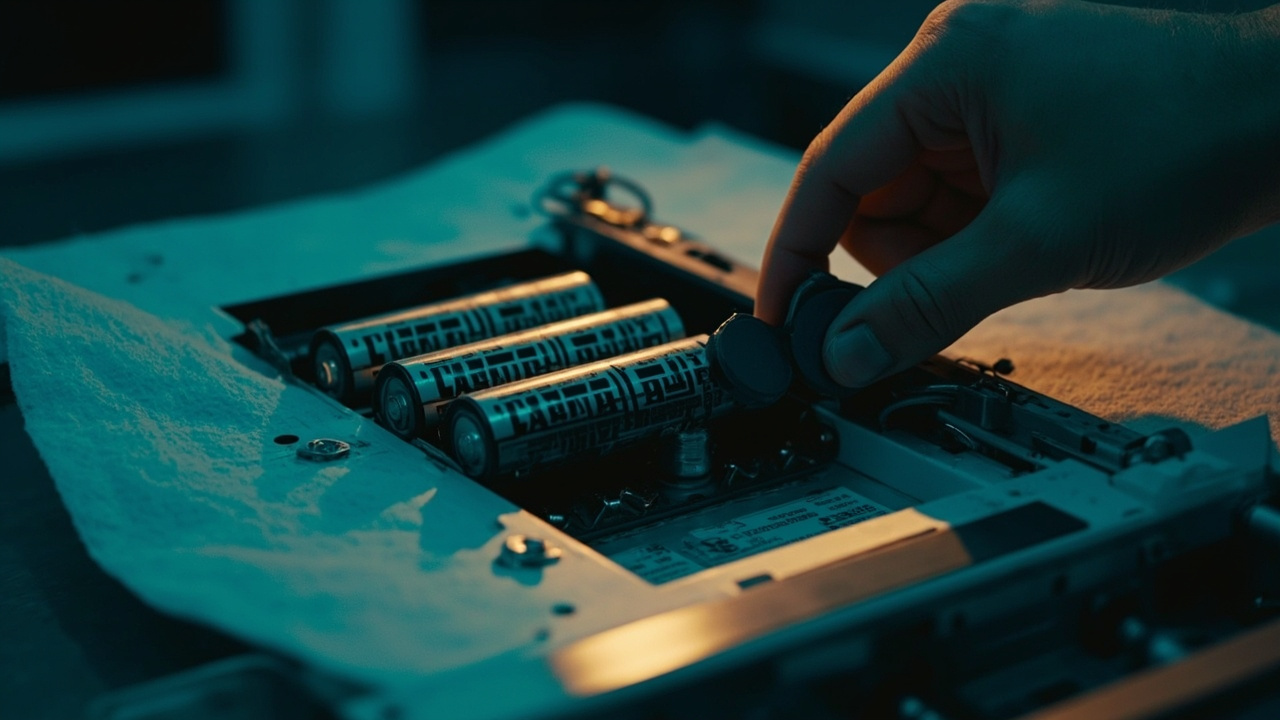
Mechanical Versus Electronic Diagnosis Worksheet You Can Fill in on Site
Operations memo The quote request is where the decision turns
To: Facility ManagerOperating stage: Post-Award OperationsDecision: Classify an in-service fault at the door and route the next action.Output: One completed worksheet for each door or unit identifier.
This field operations brief gives the facility manager a usable on-site worksheet for a door that will not operate as expected. Use the mechanical versus electronic diagnosis worksheet to separate observable door mechanics from power, credential, controller and drive behavior before anyone adjusts, repairs or replaces hardware. The aim is an evidence-led branch, not a guess from the symptom alone. A published treatment of the same step is Electronic Lock vs Mechanical Lock. What can be supplied is listed in the smart door locks.
Direct answer. Short version — mechanical versus electronic diagnosis worksheet is treated here as mechanical versus electronic diagnosis worksheet first. mechanical-versus-electronic-diagnosis comes second. The evidence for mechanical versus electronic diagnosis worksheet is named in the sections below. A mechanical versus electronic diagnosis worksheet covers the period after handover. It names the owner. mechanical versus electronic diagnosis worksheet is the interval that makes mechanical versus electronic diagnosis worksheet visible before it becomes a complaint.
A field service decision record is complete only when each action states what it ruled out. That turns attempted checks into usable diagnosis, gives the manager a clean support handover, and keeps an unresolved result visible instead of allowing a unit swap to become the default explanation.
Conditions for the first visit
The practical counterpart to this point is private label smart lock warranty. That is the same question mechanical versus electronic diagnosis worksheet has to answer here.Use the on-site fault worksheet in this order:
- Capture the symptom and physical door state before touching the lock.
- Do not force a binding handle, latch or bolt.
- Use manual operation only as the installed product instructions and site procedure allow.
- Record unknown rather than guessing.
- Do not include a credential identifier in the form.
- Photograph the condition only where site policy permits.
When an instruction, part or capability is model-specific, confirm on the dated product page for the specific SKU.
Information captured at the door
Complete these fields before selecting a repair, replacement or escalation route.
| Field | On-site entry | Evidence required |
|---|---|---|
| Door or unit identifier | Object-schedule identifier, not room number alone | |
| Model and variant | Copy from the physical label | |
| Reported and recovery times | Date and time reported; date and time door became operable again | |
| Symptom | Technician’s words plus the measured observation | |
| Physical state | Locked, unlocked, held open or unknown | |
| Manual operation | Handle, latch and permitted override result | |
| Powered response | Indicator, controller or application observation | |
| Credential state | Accepted, rejected, not tested or not involved | |
| Supporting evidence | Photograph, reading or technician note |
Branching the evidence
The mechanical versus electronic diagnosis worksheet should branch only after the initial fields are complete. It separates mechanical lock fault isolation from electronic lock fault isolation, but the columns indicate possibilities rather than verdicts.
| Observation at the door | Points toward mechanical cause | Points toward electronic cause | Next controlled step |
|---|---|---|---|
| Handle or latch binds | Door alignment, obstruction or latch preload | Unrelated until physical checks clear | Inspect the closing path without forcing it |
| Permitted manual override operates | A seized lock body becomes less likely | Drive, power or electronics becomes more likely | Compare the powered response with the manual response |
| Physical state differs from the recorded state | The physical position remains relevant | State synchronisation or configuration becomes possible | Check both readings and record each source |
| Credential is rejected while physical operation works | The mechanical path may remain usable | The credential path needs isolation | Test one controlled credential route |
| The same symptom appears on a matching unit | An isolated mechanical defect becomes less likely | A shared configuration or installed-version issue becomes possible | Stop repeated unit swaps and seek technical review |
Mixed observations remain mixed. Record the leading branch, the conflicting evidence and the next check; do not force every symptom into one category.
Running the checks in order
Treat the ruled-out check log as the principal diagnosis evidence. A check without a recorded exclusion leaves the next technician repeating work.
flowchart TD
    A[Capture symptom and physical state] --> B{Door path obstructed}
    B -->|Yes| C[Inspect alignment latch and closer]
    B -->|No| D{Manual override operates}
    D -->|No| E[Record unresolved mechanical branch]
    D -->|Yes| F[Check power indicator controller and credential path]
    F --> G{Evidence follows electronic branch}
    G -->|Yes| H[Record electronic branch and route support]
    G -->|No| I[Record overlap and seek technical review]
Readers comparing approaches usually start with private label smart lock spare parts. That is the same question mechanical versus electronic diagnosis worksheet has to answer here.
| Order | Check | What to record | What a clear result rules out |
|---|---|---|---|
| 1 | Physical obstruction and closing path | What is touching, misaligned or obstructed | A free path at this point excludes immediate obstruction |
| 2 | Permitted manual operation | Whether the handle and latch move freely | Free manual operation makes a seized lock body less likely |
| 3 | Power and reported indicator state | Observed power condition and exact message | This separates power indication from the broader control path |
| 4 | Physical state against recorded state | Both readings and their sources | Agreement removes an immediate state-mismatch explanation |
| 5 | Credential or remote path | Accepted, rejected or untested result | A rejected credential isolates that path without condemning the whole lock |
| 6 | Matching-unit comparison | Whether the same symptom appears elsewhere | Repetition changes the branch from unit replacement to shared-cause review |
Routing an unresolved branch
The wider branch logic is set out in Clause Bank: Mechanical Versus Electronic Diagnosis Triage: The Branch to Follow First. For a normalized record format, use Measuring Mechanical Versus Electronic Diagnosis: What to Record. Installed-lock responsibilities are covered in Mechanical Versus Electronic Diagnosis for Installed Smart Locks: A Buyer and Operator Guide, while unresolved cases can be handed over using Escalation Path for Mechanical Versus Electronic Diagnosis.
Assemble smart lock escalation evidence before requesting a decision. Include the door identifier, symptom, measured observations, checks performed, what each check excluded, relevant photographs or readings, and the requested outcome. If a part was fitted or a unit was swapped, identify it and retain the removed item under the buyer’s evidence procedure.
CONFIRM-PER-SUPPLIER: Confirm the supplier’s written diagnostic sequence, required evidence, replacement authority and return steps for the specific model and installed version.
CONFIRM-WITH-LOCAL-FACILITY-POLICY: Confirm the alternate-access, occupied-door and manual-override steps that apply at this site before the visit.
Completing the handover
The facility manager should accept the record only when it contains:
- The symptom, measured observation and supporting evidence.
- The order of checks and what each check ruled out.
- The selected branch, any conflicting evidence and the next action.
- The credential state before and after the intervention.
- The part fitted or unit swapped, with the old item retained.
- The time the door became operable again.
- Confirmation that model-specific instructions were checked against the dated product page for the specific SKU.
This worksheet gives the next technician a defensible starting point while leaving unresolved causes visibly unresolved.
When the file is ready, request a quote against the written requirement.