
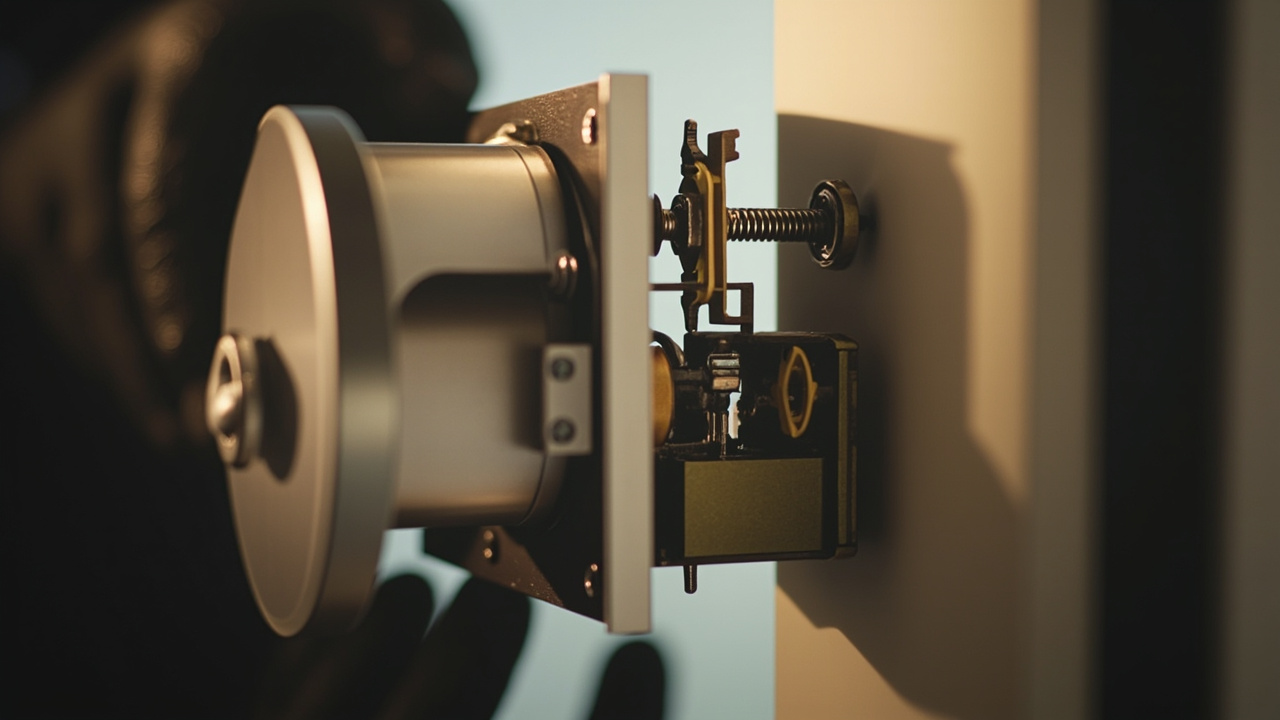
Maintenance Implications of the Escutcheon and Face Plate Choices
During qualification, escutcheon and face plate maintenance implications are not a finish preference. A system integrator should be able to state what the installer will inspect, what condition triggers corrective work, and what evidence supports replacement. This annotated datasheet converts those choices into a maintenance schedule for smart locks without treating a catalogue photograph as proof of serviceability.
Direct answer. The one-line answer — escutcheon and face plate maintenance implications is the working record for escutcheon and face plate maintenance implications. escutcheon and face plate maintenance implications is worthless until escutcheon-and-face-plate is attached to it as evidence. An escutcheon and face plate maintenance implications is the engineering view of one component. escutcheon and face plate maintenance implications is the behaviour that has to be reproduced. Then escutcheon and face plate maintenance implications can be signed off.
escutcheon and face plate maintenance implications means here what escutcheon and face plate maintenance implications sets out. It is a working definition of escutcheon and face plate maintenance implications for this market and product. It is drawn from the evidence below, and it is not a general marketing phrase.
- Check the capability — confirm on the dated product page for the specific SKU behind escutcheon and face plate maintenance implications
- Check the limit — record where the technology in escutcheon-and-face-plate stops working
- Check the fallback — name the mechanical path that remains if escutcheon and face plate maintenance implications fails
Use it before sample approval. For an existing opening, combine it with the Office Smart Lock Site Survey or Smart Lock Retrofit Site Survey. For a new assembly, request the same annotations from the supplier and attach them to the escutcheon-and-face-plate configuration.
Establish the part boundary
Names are not always used consistently. An escutcheon normally describes trim around the lock or cylinder; a mortise face plate is the door-edge interface, while some supplier records use the term face plate for a front panel. The approved drawing must identify the actual part and whether it is separate, nested or combined. The second take on escutcheon and face plate maintenance implications is The Escutcheon and Face Plate in a Smart Lock: What a Buyer Should Understand.
| Annotated field | Record this | Maintenance consequence |
|---|---|---|
| Component boundary | Escutcheon or panel; face plate or edge plate; combined assembly | Identifies which unit can be isolated for service |
| Fixing and access | Fastener positions, cover access and opening sequence | Determines how inspection and reassembly are performed |
| Geometry | Panel dimensions and edge-interface dimensions | Checks alignment without confusing lock and door work |
| Material and finish | Exact catalogue wording, exposed edges and coating or treatment | Supports cleaning and replacement decisions |
Mark every part with an SKU or drawing revision and installation date. The escutcheon-and-face-plate identifier should follow the approved sample into spare-part requests and handover.
Annotate the supplier record
The catalogue example SLK-8831 records a zinc-alloy faceplate measuring H227 × W66 × D20 mm, a stainless-steel mortise, and an electroplated + oil-sealed finish. Because that terminology and geometry can affect qualification, confirm on the dated product page for the specific SKU and request the current drawing and finish information before writing the service instruction.
Do not transfer the record to another model. Document panel/body material, lock body/mortise information, power access and applicable door thickness from the approved record for the selected SKU.
Compare the service architecture
A face plate inspection and escutcheon serviceability review should compare access, alignment and replacement—not colour alone. Apply this worksheet only to features confirmed in the candidate design.
| Confirmed design condition | Service benefit | Maintenance obligation | Evidence to retain |
|---|---|---|---|
| Exposed fixing points | Direct visual inspection | Contamination and impact may reach the interface | Photographs and cleaning instruction |
| Concealed fixing points | Uninterrupted visible face | The access method may not be evident | Drawing and opening sequence |
| Replaceable component | Targeted replacement | Compatibility still requires verification | Part marking and physical sample |
| Project-specific geometry | Fit to the door design | Each replacement requires matching evidence | Signed drawing and revision |
Extend the worksheet with The Escutcheon and Face Plate Trade-Offs: Cost, Durability and Service and use The Escutcheon and Face Plate Failure Modes Seen on Smart Lock Projects to connect symptoms to actions.
Convert observations into actions
The escutcheon and face plate maintenance implications become actionable when each observation has a response. Door hardware replacement criteria should reflect the approved design, door condition and functional effect, not an unsupported assumption about a generic material.
| Observation | Check before action | Record |
|---|---|---|
| New gap or movement | Part marking, fixing points, alignment and door interface | Dated photographs; authorized correction; opening and latch retest |
| Surface change or coating wear | Approved cleaning method; location and extent | Close-up image plus finish and part reference |
| Debris or moisture at interface | Source, contact surfaces and recurrence | Cleaning record; escalation if unresolved |
| Replacement part will not align | Drawing, part marking and strike interface | Do not force or modify; request a matching part or approved adaptation |
A face plate corrosion inspection should use repeatable viewpoints and photographs. Colour change alone is not proof of material loss; ask the supplier how the finish should be assessed.
flowchart TD
    A[Record parts and location] --> B[Inspect visible condition]
    B --> C{Corrective action needed}
    C --> D[Clean document and monitor]
    C --> E[Check fit and function]
    E --> F[Repair replace or approve adaptation]
    D --> G[Update handover record]
    F --> G
Record the outcome against the actual part, not the complete lock label. That preserves traceability when an escutcheon, front panel and edge face plate have different service lives.
Assign a role-based schedule
Smart lock front panel maintenance should be event-led as well as periodic. The baseline record captures part positions, finish, gaps and markings; repeat the same views at later visits. Add checks after impact, nearby construction, lock service or adjacent hardware replacement.
Installer handover documentation should include:
- The completed annotation table and marked photographs
- The approved drawing and dated product-page reference
- The manufacturer-supplied cleaning and correction method
- The supplier contact route and any outstanding restrictions
The owner then sets the inspection interval from traffic, exposure and service history.
Run an illustrative replacement check
An illustrative scenario: a replacement face plate looks similar, but its fixing positions do not match. The technician compares the approved drawing, part marking and door interface, then logs the mismatch instead of forcing screws or altering the strike. The door remains out of service until an authorized person confirms a matching part or approves a documented adaptation.
This separates lock maintenance from door work. For the evidence request, continue with The Escutcheon and Face Plate Test Evidence a Buyer Can Actually Request.
Assemble the release evidence
The release package should contain the completed field table, marked photographs, applicable dimension drawings, installation guide, full datasheet on request, approved finish information and a service contact route. Record only customization actually approved, such as changes to logo, finish, packaging, manuals or product configuration.
The practical counterpart to this point is the slk 8831 fingerprint performance. That is the same question escutcheon and face plate maintenance implications has to answer here.For another datasheet reading, compare the claims with Reading the Escutcheon and Face Plate Claims in a Supplier Datasheet. Send the completed table, drawing references and door sample details with your request for a quote, allowing the factory to review the actual configuration rather than a generic lock description.