
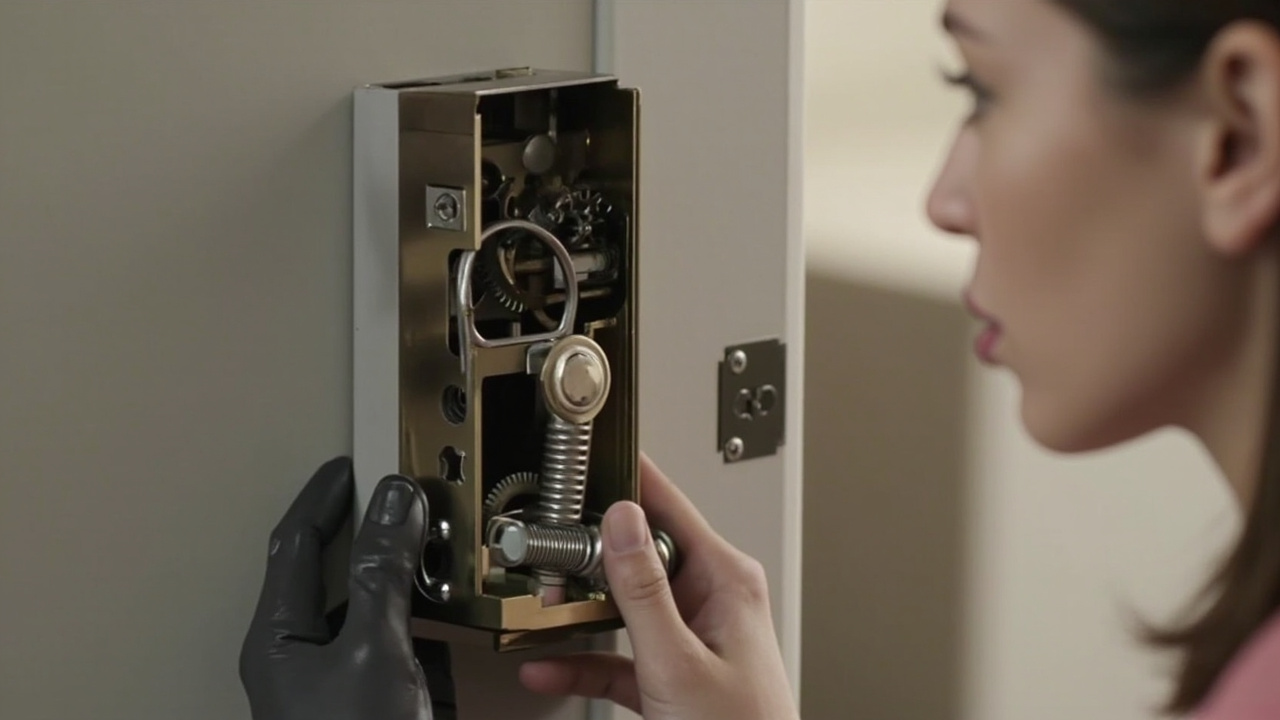
Maintenance Implications of Deadbolt Throw and Strike Choices
This article looks at deadbolt throw and strike maintenance implications below the marketing line, at the level where a specification can pin it down. Briefing memoTo: System integrators preparing a smart lock qualification packageDecision stage: QualificationSubject: Maintenance consequences of deadbolt, strike plate and keeper selection
Direct answer. The term deadbolt throw and strike maintenance implications carries one meaning throughout this article. It is the one given in deadbolt throw and strike maintenance implications. That is a working definition of deadbolt throw and strike maintenance implications
The deadbolt throw and strike maintenance implications start at the door and frame interface, not inside the lock. Qualification teams need to separate a specified choice from a site condition that merely resembles one. The useful question is whether the bolt retracts and extends fully through repeated cycles with the door closed, the closer operating and the frame inside the supplier’s documented geometry. This memo converts that question into a fit request, an inspection sequence and a release record for system integrators.
Establish the qualification baseline
The supplied first-party catalogue treats the deadbolt, strike plate, strike keeper, door frame rebate, door leaf, backset, spindle and latch/bolt drive as separately inspectable objects. With 79 published models, a family description cannot establish fit for a specific door. Confirm on the dated product page for the specific SKU and obtain a dated dimension drawing before approval. The catalogue side of this is the smart door locks.
Define the terms before measuring. Ask whether “throw” means projection beyond the door edge or total movement from retracted to extended. Record units, reference surfaces, measurement points and the tolerance basis in the deadbolt throw measurement worksheet.
Read deadbolt throw and strike maintenance implications
A short projection may provide limited usable engagement if the keeper geometry does not match. A long projection can increase contact with a poorly positioned frame. Neither condition should be inferred from a catalogue label alone.
| Strike or door condition | Maintenance exposure to investigate | Qualification evidence |
|---|---|---|
| Single strike opening | Frame movement can shift the only keeper away from the bolt path | Hole center, keeper dimensions and datum photographs |
| Auxiliary or double strike | Debris can collect in the unused cavity, while the active keeper may be misunderstood | Drawing showing both locations and the intended bolt path |
| Shallow or damaged rebate | The bolt edge or latch/bolt drive can contact the frame before full seating | Rebate depth, width and condition by measurement |
| Door closer or hold-open applies preload | Binding can appear while the bolt appears aligned in an unloaded door | Closed-door observation and closer or hold-open condition |
Use strike keeper alignment checks in two conditions: with the door closed without forcing it and with it closed under its normal operating condition. Note where the bolt stops, whether it retracts freely and whether contact occurs at the bolt tip, bolt shoulder, strike edge or drive. Do not widen, drill or shim a strike until the approved drawing and project procedure permit the change.
Separate installation error from operating wear
The same symptom can originate at different layers of the door set. The first checks should identify whether the evidence points to geometry, operating force, contamination or a component before anyone proposes a replacement.
| Symptom | First checks | Record before disposition |
|---|---|---|
| Bolt does not seat fully | Throw definition, keeper dimensions and frame contact | Measured projection and achieved seat depth |
| Retraction feels tight | Door preload, bolt binding, spindle and drive condition | Door condition and location of contact |
| Repeated knock or movement | Strike fasteners, frame movement and door alignment | Fastener condition and movement under operating load |
| Auxiliary keeper collects debris | Active versus inactive cavity | Cleaning location and responsible owner |
Avoid assigning these symptoms to the lock motor or deadbolt until geometry is checked. For an electronically driven design, ask the supplier how drive response is separated from an installation defect; an event log is supporting evidence, not a substitute for physical inspection.
Turn fit data into inspection evidence
Ask the supplier for a dated package containing:
- A SKU-specific drawing showing bolt projection, retracted position, keeper dimensions, backset and door-preparation limits.
- Installation prerequisites covering frame squareness, rebate condition, hinge and door movement, and closer or hold-open coordination.
- The deadbolt cycle testing method, including whether the door is closed, the normal closing condition is present and the acceptance observations are recorded.
- Service instructions covering cleaning points, permitted lubricant, wear-part identification and replacement procedure.
- A failure-attribution method that separates geometry observations from motor, gearbox or latch/bolt drive symptoms.
Capture site evidence through an Office Smart Lock Site Survey or Smart Lock Retrofit Site Survey. Both should preserve the door-set dimensions, frame condition and strike location needed for later maintenance decisions.
Sequence the response without replacing diagnosis
Use the following sequence for service escalation and qualification review. Measure first, correct approved site conditions second, and request component diagnosis only when the geometry record no longer explains the symptom.
flowchart TD
    A[Confirm symptom and door state] --> B[Measure throw and keeper geometry]
    B --> C{Alignment matches dated drawing}
    C -->|No| D[Correct approved site condition]
    D --> E[Repeat closed-door cycle test]
    C -->|Yes| E
    E --> F{Operation is repeatable}
    F -->|Yes| G[Record release and baseline]
    F -->|No| H[Escalate unexplained symptom]
A preventive maintenance schedule should assign the door frame rebate inspection, strike fastener check, alignment recheck and cycle-test record to named roles. State who may clean the keeper, who may adjust the frame and when an unexplained recurrence moves to the supplier or lock service team. If the closer or hold-open arrangement changes after installation, repeat the closed-door test rather than assuming the original baseline still applies.
Set the qualification release status
Close the smart lock qualification file with one of three dispositions:
| Status | Evidence required | Next action |
|---|---|---|
| Pass | Dated SKU drawing matches site measurements; closed-door cycle and strike keeper alignment are repeatable | Release the baseline and maintenance record |
| Conditional | A known site variation is documented and a control is assigned | Release with a dated corrective action and recheck point |
| Hold | Dimensions conflict, terms are undefined or binding remains unexplained | Keep the lock out of approval and request dated supplier evidence |
A missing drawing is an open qualification item rather than proof of a maintenance failure. Likewise, one successful operation does not close a recurring symptom. Store the measurements, door condition, result and responsible owner with the door record so future service starts from the same baseline.
The same question is worked through in more detail in what smart lock is best for pin access. That is the same question deadbolt throw and strike maintenance implications has to answer here.
Use the linked analyses as handoffs
Keep each companion analysis in its proper lane. Deadbolt Throw and Strike Trade-Offs: Cost, Durability and Service supports selection decisions. Deadbolt Throw and Strike Failure Modes Seen on Smart Lock Projects supports symptom triage. Deadbolt Throw and Strike Test Evidence a Buyer Can Actually Request supports acceptance records, while Specifying Deadbolt Throw and Strike: Questions that Get Real Engineering Answers converts open points into supplier questions. These references do not replace measurements in the door record. Submit the completed package through the request-a-quote workflow and request dated evidence against the exact SKU rather than a family-level substitute.