
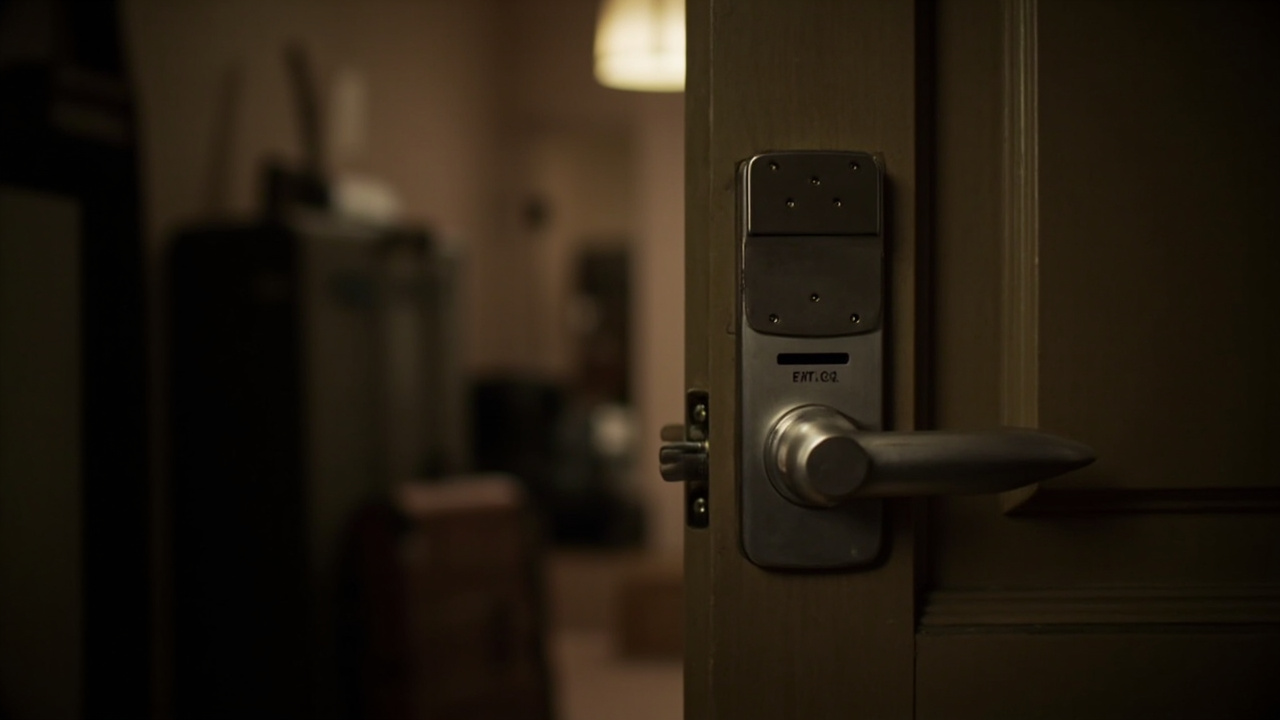
Scaling from One Site to Many: Smart Locks for Independent Boutique Hotels
To: Hotel Group procurement and operations teamFrom: Access systems evaluation leadSubject: Portfolio baseline for smart-lock evaluationDecision requested: Approve a common site record, exception register and scorecard before adding properties.
Direct answer. For boutique hotels scaling many sites, the evaluation risk is turning one successful installation into a false portfolio standard. Independent properties can share a brand and playbook while differing in door thickness, hardware
On boutique hotels scaling many sites, this article uses boutique hotels scaling many sites as the definition. It treats boutique hotels scaling many sites as a working definition specific to this market and product, rather than a general one.
Decision requested Against the catalogue, boutique hotels
Approve a portfolio-ready baseline with two outputs: a normalized door schedule and an exception register. A site passes only when every in-scope door has an owner, use class, documented fit constraints, access journey, change approval and recovery route. Do not approve a hardware list first and force the next property to fit it. The comparison the same buyer runs first is Hotel Smart Locks for Boutique Hotels. Reference the catalogue record: the SLK-118 RFID Card Lock for Hotels and B&Bs, SKU confirmed on its dated product page.
| Decision | Evidence required | Portfolio rule |
|---|---|---|
| Door eligibility | Current door and frame record; owner approval | Mark “changeable” only with site evidence |
| Access model | Guest, staff and service journeys | Common labels; locally assigned credentials |
| Product fit | Dated evidence for the proposed SKU | Never transfer fields between models |
| Site approval | Open exceptions and manual fallback | Conditional or approved; no implied approval |
Use site one to test the schema
The first property is a schema test, not a template. Its doors may include guest rooms, a back-of-house corridor, a shopfront and a small terrace. Access may use a card or code at rooms, a keypad at service doors and a phone at the shopfront. Thick walls, mixed door thicknesses, limited strike-box space and no rewiring can defeat a hardware-first specification; lock ownership must be settled door by door.
That is why a lock evaluation scorecard should score evidence completeness and exception quality, not feature count. The Smart Locks for Independent Boutique Hotels: Door Survey and Fit Reality supplies the fit evidence to capture. For boutique hotels scaling many sites, reuse the fields and approval logic—not the first site's dimensions or assumptions.
CONFIRM-WITH-LOCAL-BUILDING-AUTHORITY: Confirm site-specific building requirements before any door is marked changeable, and document the property owner's permission separately.
Normalize the portfolio door schedule
Create a portfolio door schedule with one row per physical door or deliberate door group. Use stable site and door identifiers so quotations, survey evidence and handover records reconcile. A shared schedule is more useful than a sophisticated template that each property interprets differently.
| Field | Required content | Why the group needs it |
|---|---|---|
| Site and door ID | Property, building, floor and unique door reference | Reconciles quote, survey and handover |
| Use class | Guest room, back-of-house, shopfront, terrace or other | Keeps access journeys comparable |
| Existing condition | Door leaf, frame, hardware, strike and clearances | Reveals fit exceptions before selection |
| Access job | Who enters, how often and why | Prevents credential design becoming guesswork |
| Constraints | Rewiring, ownership, power and local work constraints | Keeps eligibility evidence visible |
| Evidence owner | Named person and source record | Stops gaps from being silently approved |
Separate portfolio rules from site exceptions
Create a multi-site smart lock rollout that standardizes what each decision contains, not the answer to every door. Keep independent hotel access control flexible at the site level, while standardizing evidence that lets the group compare sites. Guest and staff access journeys, credential revocation, lost-credential handling, exception reporting and the manual fallback need group-level definitions. Door fit, alteration permission and service arrangements remain site evidence.
Keep site access exceptions as first-class records rather than footnotes. Each states the affected door, business consequence, evidence gap, owner and disposition. A site may be approved with a named exception while an unresolved issue remains blocked. That is more honest than labelling an entire property “standard.”
Evaluate evidence, not a preferred answer
The RFQ Template for Smart Locks for Independent Boutique Hotels should request evidence against the normalized schedule rather than a generic lock list. For every proposed SKU, confirm on the dated product page for the specific SKU the dimensions, read method, power arrangement and door-set limits that affect the decision. Do not copy a catalogue field from one model to another. Require a sample record and a short response against the same fields.
Readers comparing approaches usually start with the rfid hotel lock oem. That is the same question boutique hotels scaling many sites has to answer here.
| Criterion | Pass evidence | Decision consequence |
|---|---|---|
| Record completeness | Every in-scope door has required fields | Return for completion |
| Fit confidence | Site evidence resolves the declared constraint | Eligible for selection |
| Workflow ownership | Issue, revoke and fallback steps have owners | Conditional until accepted |
| Cross-site consistency | Exceptions are visible in the portfolio view | Comparable decision, not forced uniformity |
Use one repeatable governance path
Run the same path at every site. The memo carries the decision, not merely product information.
flowchart TD
    A["Record site doors and constraints"] --> B["Normalize portfolio fields"]
    B --> C["Classify standards and exceptions"]
    C --> D["Review evidence and recovery routes"]
    D --> E["Approve, conditionally approve or block"]
Each exit produces a record for the group view: approved, conditional or blocked. That distinction protects the next site from inheriting an unresolved assumption while keeping the operator's work proportionate.
Measure scale-up readiness
Track operating measures after each site, not market benchmarks. The Guest, Resident and Staff Experience of Smart Locks in Independent Boutique Hotels can inform the journey test; the Smart Lock Procurement for Independent Boutique Hotels: The Owner Decision, Fast Payback Framing Route can frame the owner decision. The group view should reveal recurring exceptions, incomplete records, credential-process failures and guest or staff friction before they become a portfolio instruction.
This overlaps with the earlier coverage in the rfid hotel lock odm. That is the same question boutique hotels scaling many sites has to answer here.
Record the evaluation decision
End each site evaluation with a signed record: approved door-schedule version, accepted exceptions, rejected options, evidence locations, product-page confirmation date, unresolved owner and next review point. This does not promise that every property will use the same model. It is the evidence that the group can compare decisions and move faster without losing local control.
Next action: use the RFQ Template for Smart Locks for Independent Boutique Hotels for the first request, test the schedule at one property, then trial the same fields at a second, differently constrained property. If the second record needs a new meaning for the same field, revise the schema before adding more sites.
Recommendation: approve the schema, exception register and scorecard now; approve hardware only after site-specific evidence closes each affected door. Scaling should reduce repeated decisions, not remove necessary site work.
Put the answer on paper and request a quote against that document.